


Better Cities Project
  • Home
  • About Us
    Our Vision
    BCP’s vision is that free-market municipal policy solutions are broadly available, widely acceptable, and regularly employed, enabling American cities to achieve their full potential as engines of economic prosperity. We reject the idea that cities are lost to free-market principles or policies.
    Our Mission
    BCP uncovers ideas that work, promotes realistic solutions, and forges partnerships that help people in America’s largest cities live free and happy lives.
    Learn More
    • About Better Cities Project
    • Our Focus Areas
    • Our Team
    • Collaboration and Careers -- Work With BCP
  • Research and Projects
  • Latest Insights
  • Videos
  • Contact

    Address

    304 S. Jones Blvd #2826
    Las Vegas NV 89107

    Phone

    (702) 608-2046‬

    Hours

    Monday through Friday, 8 a.m. - 5 p.m.

    Email

    info@better-cities.org

No Result
View All Result
Better Cities Project
  • Home
  • About Us
    Our Vision
    BCP’s vision is that free-market municipal policy solutions are broadly available, widely acceptable, and regularly employed, enabling American cities to achieve their full potential as engines of economic prosperity. We reject the idea that cities are lost to free-market principles or policies.
    Our Mission
    BCP uncovers ideas that work, promotes realistic solutions, and forges partnerships that help people in America’s largest cities live free and happy lives.
    Learn More
    • About Better Cities Project
    • Our Focus Areas
    • Our Team
    • Collaboration and Careers -- Work With BCP
  • Research and Projects
  • Latest Insights
  • Videos
  • Contact

    Address

    304 S. Jones Blvd #2826
    Las Vegas NV 89107

    Phone

    (702) 608-2046‬

    Hours

    Monday through Friday, 8 a.m. - 5 p.m.

    Email

    info@better-cities.org

No Result
View All Result
Better Cities Project
No Result
View All Result
Home Economic Prosperity

Opportunity Zones and the limits of place-based development policy

What federal tax incentives reveal about the persistent challenges of place-based economic development

Patrick TuoheybyPatrick Tuohey
March 9, 2026
in Economic Prosperity
Reading Time: 3 mins read
A A
Opportunity Zones and the limits of place-based development policy

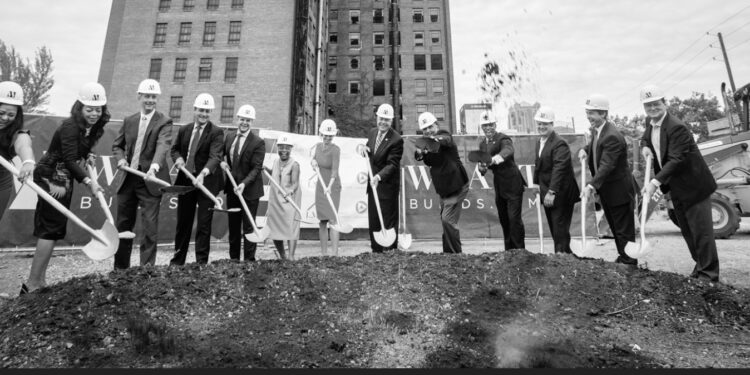
Birmingham Opportunity Zone Groundbreaking, August 2019

Share on FacebookShare on TwitterLinkedInEmail
Local governments across the United States routinely use place-based incentives to attract investment to struggling neighborhoods. The most common example is tax increment financing, or TIF, a policy that diverts future increases in property tax revenue to subsidize development in a designated area. The theory is straightforward: public incentives encourage private investment in places the market has overlooked.

But decades of experience with these policies raise a persistent question. Do they actually create new economic opportunity, or do they mostly move investment from one place to another?

That question now applies not only to local tools like TIF but also to a major federal initiative: Opportunity Zones.

RelatedInsights

The stadium subsidy debate is over and economists have moved on

Can Kansas really afford this stadium?

The math doesn’t work: Kansas’ STAR bonds alone can’t fund a Chiefs stadium

What cities can learn from the backlash against data centers

Opportunity Zones were created in the 2017 Tax Cuts and Jobs Act to encourage investment in distressed communities. The program allows investors to defer or eliminate capital gains taxes if those gains are reinvested in designated census tracts. In total, more than 8,700 tracts across the country were selected for the program.

The logic resembles many local development incentives. Reduce the cost of investment in a specific place and development should follow.

A new working paper from economists Matthew Freedman, Noah Arman Kouchekinia and David Neumark takes one of the most comprehensive looks yet at whether the policy achieved that goal. Their study analyzes employment patterns from 2013 through 2023 using detailed administrative employment data and American Community Survey data.

The results are revealing—and familiar to anyone who has studied place-based incentives.

The authors find that Opportunity Zone designation does increase job creation among businesses located inside the zones. But the magnitude is modest: workplace employment rises by roughly 1.4 percent relative to similar low-income areas that were not designated.

More important is where those jobs come from.

A large share of the employment gains within Opportunity Zones appears to be offset by job losses in nearby communities. The researchers estimate that roughly 84 percent of the jobs added inside zones are displaced from adjacent low-income tracts.

In other words, much of the observed job growth represents a relocation of economic activity rather than the creation of new employment within the broader region.

The distribution of those jobs also matters. Most of the new positions created in Opportunity Zones are filled by workers who live outside the zones themselves, including many from more affluent neighborhoods. In fact, fewer than one in eight newly created jobs goes to residents of Opportunity Zones or other low-income communities.

This pattern highlights a structural challenge common to place-based development policies. Firms respond to incentives by locating in subsidized areas, but workers are not bound by those geographic boundaries. Employment opportunities created in targeted neighborhoods often benefit commuters rather than the residents those policies are intended to help.

The researchers also find limited evidence that the program improved the economic circumstances of existing residents. Employment among residents rises slightly over time, but much of that increase reflects jobs located outside the zones. Median earnings show little improvement, and poverty rates do not meaningfully decline.

Some of the measured employment growth may instead reflect changes in who lives in these neighborhoods. The study finds evidence of demographic shifts within Opportunity Zones, including an increase in the share of residents with college degrees and changes in racial composition, suggesting that some of the gains may be tied to new residents moving into the area rather than improvements for existing ones.

These findings echo a long body of research on place-based development incentives.

Programs such as enterprise zones, empowerment zones and tax-subsidized development districts have frequently produced modest increases in economic activity within targeted areas. Yet much of that activity reflects shifts in where businesses locate rather than an expansion of overall economic opportunity.

Opportunity Zones appear to follow that pattern. Investment incentives do influence where development occurs, but the broader benefits for residents of distressed neighborhoods remain limited.

The evidence points to a broader lesson about place-based development policy. Targeted tax incentives can influence where investment occurs, but the research increasingly suggests they do little to expand economic opportunity overall.

Businesses respond to subsidies by relocating or reorganizing activity, while workers and residents remain mobile across city and regional boundaries. The result is often a redistribution of development within a metropolitan area rather than meaningful improvement for the communities these policies are meant to help.

None of this means distressed neighborhoods should be ignored. But it does suggest policymakers should be skeptical of strategies built around geographic tax preferences. Durable economic opportunity is far more likely to come from broader policies that improve the conditions for investment and job creation everywhere—not from incentives tied to a map.

 

Tags: Corporate IncentivesEconomic DevelopmentEmploymentJobsSubsidies
Previous Post

When inheritance becomes housing policy

Patrick Tuohey

Patrick Tuohey

Patrick Tuohey is co-founder and policy director of the Better Cities Project. He works with taxpayers, media, and policymakers to foster understanding of the consequences — sometimes unintended — of policies such as economic development, taxation, education, and transportation. He also serves as a senior fellow at Missouri's Show-Me Institute and a visiting fellow at the Virginia-based Yorktown Foundation for Public Policy.

Explore More

  • Economic Prosperity
  • Criminal Justice and Public Safety
  • Transportation and Infrastructure
  • Education
  • Energy and Environment
  • Community, Growth and Housing
  • Clean, Open and Fair Government

Recent News

Opportunity Zones and the limits of place-based development policy

Opportunity Zones and the limits of place-based development policy

March 9, 2026
Why minimum lot size reform should be on every city’s housing agenda

When inheritance becomes housing policy

March 4, 2026
Cities can fast-track infill housing with pre-approved plans—and they should

Build more housing. Yes, even the expensive kind

March 2, 2026
Illinois tests the limits of local zoning control

Illinois tests the limits of local zoning control

February 26, 2026
Load More
Facebook Twitter RSS
Better Cities Project

BCP helps local leaders leverage public policy to create freer and happier communities. We uncover what works, promote solutions, and forge partnerships that turn ideas into results.


© 2025 Better Cities Project

Our Focus Areas

  • Economic Prosperity
  • Criminal Justice and Public Safety
  • Transportation and Infrastructure
  • Education
  • Energy and Environment
  • Community, Growth and Housing
  • Clean, Open and Fair Government

The Fine Print

  • Privacy Policy
  • Terms and Conditions
  • Reports and Financials

Recent News

Opportunity Zones and the limits of place-based development policy

Opportunity Zones and the limits of place-based development policy

March 9, 2026
Why minimum lot size reform should be on every city’s housing agenda

When inheritance becomes housing policy

March 4, 2026
Cities can fast-track infill housing with pre-approved plans—and they should

Build more housing. Yes, even the expensive kind

March 2, 2026

Welcome Back!

Login to your account below

Forgotten Password?

Retrieve your password

Please enter your username or email address to reset your password.

Log In

Add New Playlist

Love Cities? So Do We.

Get ahead of the curve -- learn about innovations, ideas and policies driving change in America's largest cities, with BCP in your inbox.


You have Successfully Subscribed!

No Result
View All Result
  • About Us
  • The Team
  • Work With Better Cities Project
  • Research and Projects
  • Latest Insights
  • Videos

© 2025 Better Cities Project