
Better Cities Project
  • Home
  • About Us
    Our Vision
    BCP’s vision is that free-market municipal policy solutions are broadly available, widely acceptable, and regularly employed, enabling American cities to achieve their full potential as engines of economic prosperity. We reject the idea that cities are lost to free-market principles or policies.
    Our Mission
    BCP uncovers ideas that work, promotes realistic solutions, and forges partnerships that help people in America’s largest cities live free and happy lives.
    Learn More
    • About Better Cities Project
    • Our Focus Areas
    • Our Team
    • Collaboration and Careers -- Work With BCP
  • Research and Projects
  • Latest Insights
  • Videos
  • Contact

    Address

    304 S. Jones Blvd #2826
    Las Vegas NV 89107

    Phone

    (702) 608-2046‬

    Hours

    Monday through Friday, 8 a.m. - 5 p.m.

    Email

    info@better-cities.org

No Result
View All Result
Better Cities Project
  • Home
  • About Us
    Our Vision
    BCP’s vision is that free-market municipal policy solutions are broadly available, widely acceptable, and regularly employed, enabling American cities to achieve their full potential as engines of economic prosperity. We reject the idea that cities are lost to free-market principles or policies.
    Our Mission
    BCP uncovers ideas that work, promotes realistic solutions, and forges partnerships that help people in America’s largest cities live free and happy lives.
    Learn More
    • About Better Cities Project
    • Our Focus Areas
    • Our Team
    • Collaboration and Careers -- Work With BCP
  • Research and Projects
  • Latest Insights
  • Videos
  • Contact

    Address

    304 S. Jones Blvd #2826
    Las Vegas NV 89107

    Phone

    (702) 608-2046‬

    Hours

    Monday through Friday, 8 a.m. - 5 p.m.

    Email

    info@better-cities.org

No Result
View All Result
Better Cities Project
No Result
View All Result
Home Transportation and Infrastructure

Concrete with a human touch: Can we make infrastructure that repairs itself?

Mouna RedaSamir ChidiacbyMouna RedaandSamir Chidiac
December 12, 2025
in Transportation and Infrastructure
Reading Time: 4 mins read
A A
Concrete with a human touch: Can we make infrastructure that repairs itself?
Share on FacebookShare on TwitterLinkedInEmail
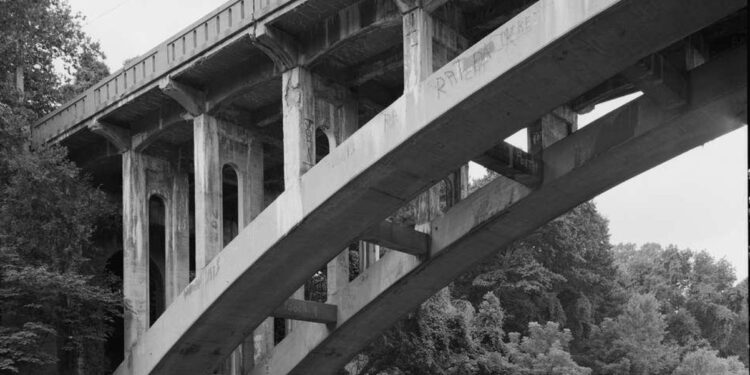
As winter approaches, Canada’s roads, bridges, sidewalks and buildings are facing a familiar problem: cracks caused by large temperature swings. These cracks weaken infrastructure and cost millions to repair every year.

But what if concrete could heal itself like human skin, keeping our structures, roads and bridges strong and saving millions of dollars?

Concrete is the most widely used construction material, known for its durability and low maintenance. Yet it’s still susceptible to cracking.

RelatedInsights

New York’s toll zone cut pollution sharply — here’s what cities should know

Why some cities are hiring robots—and what they’ve learned so far

New Resource: Local Policies to Expand Economic Opportunity

Local dollars, local decisions: realigning infrastructure incentives

Concrete is made by mixing cement, water, aggregate and other chemicals used to enhance its properties. As cement reacts with water, it forms a paste that binds everything together.

During this process, changes in volume, improper placement and finishing, and later environmental factors can create cracks. These cracks allow water, other liquids, gases and harmful chemicals to penetrate the concrete, compromising its strength over time.

This challenge has led researchers to eagerly explore what can be done to heal these cracks. In our research, we are researching how self-healing concrete can make infrastructure more durable.

Self-healing concrete

When our skin is cut, it’s able to heal on its own. Inspired by this, researchers started re-imagining concrete with similar abilities.

Traditional concrete is able to mend small cracks when water triggers leftover cement in a process known as autogenous healing. This process, however, is very slow and limited to narrow cracks. Since concrete is man-made, it has limited ability to “self-heal” without a little extra help. This led researchers to develop what is called autonomous healing.

Autonomous healing mimics nature by adding special materials like minerals, polymers, micro-organisms or other healing agents into concrete. These materials react chemically or physically with concrete to fill the cracks.

The first modern concept of self-healing concrete was introduced by American researcher Carolyn M. Dry in the early 1990s. In 2006, Dutch microbiologist Hendrik M. Jonkers developed a special concrete that uses bacteria to heal cracks.

Later, Jonkers and civil engineer Erik Schlangen gained attention with “bio-concrete” that incorporates bacteria in spore form. When moisture enters a crack, the spores activate and produce calcium carbonate, one of the most suitable fillers for concrete.

This process, called microbiologically induced calcite precipitation, can heal cracks up to one millimetre wide. The process, however, is very slow and depends on the presence of calcium and moisture in concrete, which makes applying it on a large scale challenging.

Beyond bacteria

The limitations of bacteria-based self-healing led researchers to explore chemical-based mechanisms. These healing agents will react with water, air, cement or curing agent to fill in cracks quickly.

Healing agents can work in two ways: some use a single material, like sodium silicate. Others, like dicyclopentadiene, need two materials. For a two-component type, a substance must be added to start the reaction, and both materials must be released at the same time to repair cracks.

This chemical method can repair larger cracks and works faster than the bacteria-based approaches but comes with its own challenges. The biggest question is: How can we ensure the healing agent survives concrete mixing and is only released when a crack forms?

To address this, researchers store the healing agent in protective mediums — either a special network (called a vascular network) or tiny capsules. These storage mediums protect the healing material until a crack forms. When that happens, the capsules or network rupture to release the healing agent and fill the crack.

Vascular networks require an external reservoir to supply the healing agent, which makes them difficult to cast, vulnerable to damage during casting and susceptible to leaks. Because of this, encapsulation has emerged as a promising approach.

Encapsulation as a potential solution

Encapsulation involves coating the active agent with polymeric shells to create micro-capsules. Despite its promise, this technique still faces hurdles. Researchers use different methods to make and test the capsules, and there is no standardized way to compare results or test efficacy. The bond between the capsule and the surrounding concrete poses additional challenges and needs more investigation.

In our lab at McMaster University, we are researching the optimum geometrical and mechanical properties of capsules that are compatible with the surrounding concrete. The capsules should survive concrete harsh mixing conditions, while still rupture upon cracking.

We’re also developing a standarized test method to evaluate the survival capsule rate during mixing, and another test to evaluate the efficiency of the self-healing concrete system. And we’re investigating the feasibility of incorporating both bacteria- and chemical-based capsules for short- and long-term self-healing.

More research is needed to determine which self-healing method works best —bio-concrete, chemical-based concrete or perhaps a combination of both.

Ultimately, finding ways to integrate these solutions into infrastructure will benefit communities around the world. Cracks in concrete don’t just look bad; they lead to deterioration over time and costly repairs. That is why developing concrete that resists cracking or heals itself is so important.
Source: The Conversation
Tags: InfrastructureResearchScienceUrban Transportation
Previous Post

New York’s toll zone cut pollution sharply — here’s what cities should know

Mouna Reda

Mouna Reda

Mouna Reda is a post doctorate fellow at McMaster University in the Department of Civil Engineering. She is also a member of the McCall MacBain Postdoctoral Fellows Teaching & Leadership Program at McMaster University.

Samir Chidiac

Samir Chidiac

Dr. Chidiac’s research overarching focus is Sustainability and Resiliency of materials and structures. Within this focus, four research themes are studied. 1) Design, rheology and durability of self consolidating concrete (SCC) and ultra high-performance concrete (UHPC); 2) Self healing of concrete cracks at multiple scales; 3) Self diagnosing and healing of concrete; and 4) Energy efficiency of buildings. The research is multiscale and multi-science and includes both experimentation and modelling.

Explore More

  • Economic Prosperity
  • Criminal Justice and Public Safety
  • Transportation and Infrastructure
  • Education
  • Energy and Environment
  • Community, Growth and Housing
  • Clean, Open and Fair Government

Recent News

Concrete with a human touch: Can we make infrastructure that repairs itself?

Concrete with a human touch: Can we make infrastructure that repairs itself?

December 12, 2025
New York’s toll zone cut pollution sharply — here’s what cities should know

New York’s toll zone cut pollution sharply — here’s what cities should know

December 10, 2025
Cities can fast-track infill housing with pre-approved plans—and they should

Cities can fast-track infill housing with pre-approved plans—and they should

December 9, 2025
Cities should stick to the basics of governing

Cities should stick to the basics of governing

December 3, 2025
Load More
Facebook Twitter RSS
Better Cities Project

BCP helps local leaders leverage public policy to create freer and happier communities. We uncover what works, promote solutions, and forge partnerships that turn ideas into results.


© 2025 Better Cities Project

Our Focus Areas

  • Economic Prosperity
  • Criminal Justice and Public Safety
  • Transportation and Infrastructure
  • Education
  • Energy and Environment
  • Community, Growth and Housing
  • Clean, Open and Fair Government

The Fine Print

  • Privacy Policy
  • Terms and Conditions
  • Reports and Financials

Recent News

Concrete with a human touch: Can we make infrastructure that repairs itself?

Concrete with a human touch: Can we make infrastructure that repairs itself?

December 12, 2025
New York’s toll zone cut pollution sharply — here’s what cities should know

New York’s toll zone cut pollution sharply — here’s what cities should know

December 10, 2025
Cities can fast-track infill housing with pre-approved plans—and they should

Cities can fast-track infill housing with pre-approved plans—and they should

December 9, 2025

Welcome Back!

Login to your account below

Forgotten Password?

Retrieve your password

Please enter your username or email address to reset your password.

Log In

Add New Playlist

Love Cities? So Do We.

Get ahead of the curve -- learn about innovations, ideas and policies driving change in America's largest cities, with BCP in your inbox.


You have Successfully Subscribed!

No Result
View All Result
  • About Us
  • The Team
  • Work With Better Cities Project
  • Research and Projects
  • Latest Insights
  • Videos

© 2025 Better Cities Project