

Better Cities Project
  • Home
  • About Us
    Our Vision
    BCP’s vision is that free-market municipal policy solutions are broadly available, widely acceptable, and regularly employed, enabling American cities to achieve their full potential as engines of economic prosperity. We reject the idea that cities are lost to free-market principles or policies.
    Our Mission
    BCP uncovers ideas that work, promotes realistic solutions, and forges partnerships that help people in America’s largest cities live free and happy lives.
    Learn More
    • About Better Cities Project
    • Our Focus Areas
    • Our Team
    • Collaboration and Careers -- Work With BCP
  • Research and Projects
  • Latest Insights
  • Videos
  • Contact

    Address

    304 S. Jones Blvd #2826
    Las Vegas NV 89107

    Phone

    (702) 608-2046‬

    Hours

    Monday through Friday, 8 a.m. - 5 p.m.

    Email

    info@better-cities.org

No Result
View All Result
Better Cities Project
  • Home
  • About Us
    Our Vision
    BCP’s vision is that free-market municipal policy solutions are broadly available, widely acceptable, and regularly employed, enabling American cities to achieve their full potential as engines of economic prosperity. We reject the idea that cities are lost to free-market principles or policies.
    Our Mission
    BCP uncovers ideas that work, promotes realistic solutions, and forges partnerships that help people in America’s largest cities live free and happy lives.
    Learn More
    • About Better Cities Project
    • Our Focus Areas
    • Our Team
    • Collaboration and Careers -- Work With BCP
  • Research and Projects
  • Latest Insights
  • Videos
  • Contact

    Address

    304 S. Jones Blvd #2826
    Las Vegas NV 89107

    Phone

    (702) 608-2046‬

    Hours

    Monday through Friday, 8 a.m. - 5 p.m.

    Email

    info@better-cities.org

No Result
View All Result
Better Cities Project
No Result
View All Result
Home Transportation and Infrastructure

New York’s toll zone cut pollution sharply — here’s what cities should know

A new study finds cordon pricing linked to lower PM₂.₅ levels across the metro area

Patrick TuoheybyPatrick Tuohey
December 10, 2025
in Transportation and Infrastructure
Reading Time: 2 mins read
A A
New York’s toll zone cut pollution sharply — here’s what cities should know
Share on FacebookShare on TwitterLinkedInEmail
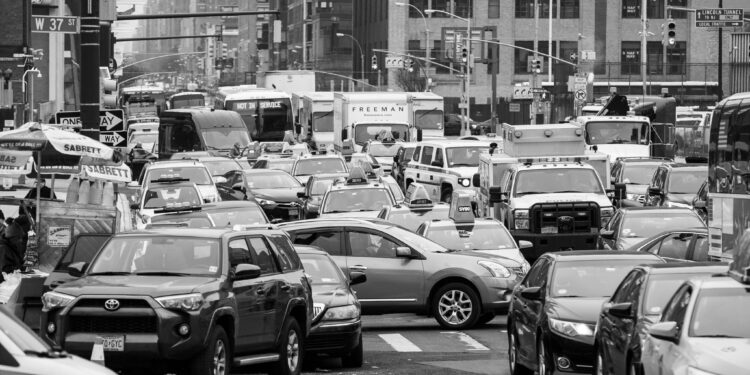
A new study out of New York City gives cities across the country a reason to look again at congestion pricing. The research shows that charging drivers to enter certain busy areas can improve air quality—and do so quickly. That’s important for cities struggling with traffic, pollution, or declining gas-tax revenue.

The study was led by Cornell University researcher H. Oliver Gao and appeared in the journal npj Clean Air. It looked at the first six months of New York’s “Congestion Relief Zone,” where drivers now pay to enter Manhattan south of 60th Street. The researchers found a clear drop in harmful air pollution—specifically, tiny particles that can cause serious lung and heart problems.

Pollution levels inside the toll zone dropped by about one-fifth, and smaller improvements showed up across the city and surrounding suburbs. The biggest changes happened over time. In the first week, the drop in pollution was modest. But by five months in, air quality had improved much more noticeably.

RelatedInsights

Why some cities are hiring robots—and what they’ve learned so far

New Resource: Local Policies to Expand Economic Opportunity

Local dollars, local decisions: realigning infrastructure incentives

Everything is bigger in Texas, except parking mandates

The study did not look at health outcomes or travel behavior directly. It doesn’t tell us whether fewer people drove, more took transit, or how traffic patterns changed. It focuses only on the pollution data—though the authors suggest the cleaner air may reflect changes in how and when people travel.

Still, the message for other cities is clear. Road pricing can improve local air quality in a short period, without waiting on big infrastructure projects. As driving practices and technologies change, pricing tools like these could become a key part of urban transportation policy.

Other research in recent years supports this idea. Reviews of similar programs around the world show that pricing works best when paired with other transit options. Studies also suggest that toll systems can be designed to protect lower-income drivers while still reducing traffic.

For city leaders, the lesson isn’t just that tolling is possible. It’s that smart pricing, backed by good data and gradual rollout, can help cities cut pollution, manage traffic, and pay for better transportation options. New York’s results may not be a perfect fit for every city—but they offer a real-world example that others can learn from.
Tags: Congestion PricingPublic HealthResearchTrafficTransitUrban Transportation
Previous Post

Cities can fast-track infill housing with pre-approved plans—and they should

Patrick Tuohey

Patrick Tuohey

Patrick Tuohey is co-founder and policy director of the Better Cities Project. He works with taxpayers, media, and policymakers to foster understanding of the consequences — sometimes unintended — of policies such as economic development, taxation, education, and transportation. He also serves as a senior fellow at Missouri's Show-Me Institute and a visiting fellow at the Virginia-based Yorktown Foundation for Public Policy.

Explore More

  • Economic Prosperity
  • Criminal Justice and Public Safety
  • Transportation and Infrastructure
  • Education
  • Energy and Environment
  • Community, Growth and Housing
  • Clean, Open and Fair Government

Recent News

New York’s toll zone cut pollution sharply — here’s what cities should know

New York’s toll zone cut pollution sharply — here’s what cities should know

December 10, 2025
Cities can fast-track infill housing with pre-approved plans—and they should

Cities can fast-track infill housing with pre-approved plans—and they should

December 9, 2025
Cities should stick to the basics of governing

Cities should stick to the basics of governing

December 3, 2025
Inclusionary housing: At what price?

Why cities that won millennials are now losing families

December 2, 2025
Load More
Facebook Twitter RSS
Better Cities Project

BCP helps local leaders leverage public policy to create freer and happier communities. We uncover what works, promote solutions, and forge partnerships that turn ideas into results.


© 2025 Better Cities Project

Our Focus Areas

  • Economic Prosperity
  • Criminal Justice and Public Safety
  • Transportation and Infrastructure
  • Education
  • Energy and Environment
  • Community, Growth and Housing
  • Clean, Open and Fair Government

The Fine Print

  • Privacy Policy
  • Terms and Conditions
  • Reports and Financials

Recent News

New York’s toll zone cut pollution sharply — here’s what cities should know

New York’s toll zone cut pollution sharply — here’s what cities should know

December 10, 2025
Cities can fast-track infill housing with pre-approved plans—and they should

Cities can fast-track infill housing with pre-approved plans—and they should

December 9, 2025
Cities should stick to the basics of governing

Cities should stick to the basics of governing

December 3, 2025

Welcome Back!

Login to your account below

Forgotten Password?

Retrieve your password

Please enter your username or email address to reset your password.

Log In

Add New Playlist

Love Cities? So Do We.

Get ahead of the curve -- learn about innovations, ideas and policies driving change in America's largest cities, with BCP in your inbox.


You have Successfully Subscribed!

No Result
View All Result
  • About Us
  • The Team
  • Work With Better Cities Project
  • Research and Projects
  • Latest Insights
  • Videos

© 2025 Better Cities Project