


Better Cities Project
  • Home
  • About Us
    Our Vision
    BCP’s vision is that free-market municipal policy solutions are broadly available, widely acceptable, and regularly employed, enabling American cities to achieve their full potential as engines of economic prosperity. We reject the idea that cities are lost to free-market principles or policies.
    Our Mission
    BCP uncovers ideas that work, promotes realistic solutions, and forges partnerships that help people in America’s largest cities live free and happy lives.
    Learn More
    • About Better Cities Project
    • Our Focus Areas
    • Our Team
    • Collaboration and Careers -- Work With BCP
  • Research and Projects
  • Latest Insights
  • Videos
  • Contact

    Address

    304 S. Jones Blvd #2826
    Las Vegas NV 89107

    Phone

    (702) 608-2046‬

    Hours

    Monday through Friday, 8 a.m. - 5 p.m.

    Email

    info@better-cities.org

No Result
View All Result
Better Cities Project
  • Home
  • About Us
    Our Vision
    BCP’s vision is that free-market municipal policy solutions are broadly available, widely acceptable, and regularly employed, enabling American cities to achieve their full potential as engines of economic prosperity. We reject the idea that cities are lost to free-market principles or policies.
    Our Mission
    BCP uncovers ideas that work, promotes realistic solutions, and forges partnerships that help people in America’s largest cities live free and happy lives.
    Learn More
    • About Better Cities Project
    • Our Focus Areas
    • Our Team
    • Collaboration and Careers -- Work With BCP
  • Research and Projects
  • Latest Insights
  • Videos
  • Contact

    Address

    304 S. Jones Blvd #2826
    Las Vegas NV 89107

    Phone

    (702) 608-2046‬

    Hours

    Monday through Friday, 8 a.m. - 5 p.m.

    Email

    info@better-cities.org

No Result
View All Result
Better Cities Project
No Result
View All Result
Home Community, Growth and Housing

How Austin made housing cheaper

What other cities can learn from a decade of zoning reform, permitting changes and steady support for new supply

Patrick TuoheybyPatrick Tuohey
April 20, 2026
in Community, Growth and Housing
Reading Time: 3 mins read
A A
Texas HB 24: A win for housing development—and a lesson for other cities
Share on FacebookShare on TwitterLinkedInEmail
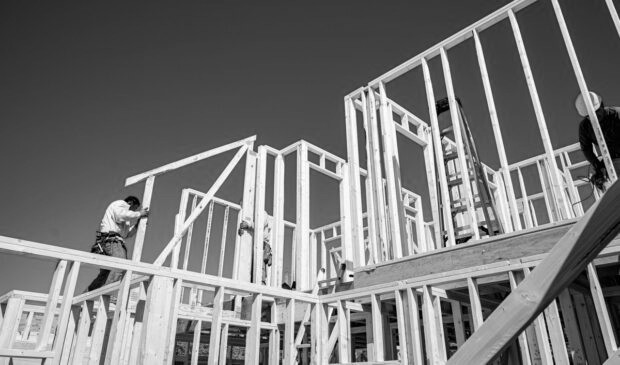
For years, local officials in high-growth cities have treated rising rents as a force of nature. Austin suggests otherwise. After one of the sharpest runups in housing costs in the country, the city changed its rules, added homes at scale and saw rents fall. That does not make Austin a cure-all. It does make it one of the clearest recent examples of what happens when a city allows more housing to be built in more places.

From 2015 to 2024, Austin added 120,000 homes, expanding its housing stock by 30 percent. Pew reports that this was more than three times the national rate over the same period. The results showed up in rents. Austin’s median rent, which stood at $1,546 in December 2021, fell to $1,296 by January 2026. In large apartment buildings, rents fell 7 percent from 2023 to 2024, and in older Class C buildings they fell about 11 percent. In a housing debate often dominated by theory, Austin offered an actual market test.

What matters most is not any single reform. Austin’s lesson is cumulative. The city made it easier to build apartments near jobs and transit, eased rules for accessory dwelling units, reduced and then largely eliminated parking mandates, used density bonuses to trade added height for income-restricted housing and backed affordable projects with bond funding. It also worked on the machinery of development itself by simplifying site-plan review and speeding approvals. Cities that want different housing outcomes usually need different housing rules, and they need them across several fronts at once.

RelatedInsights

Zoning reform gains ground, but local resistance shapes how far it goes

New York City’s quiet shift away from the neighborhood veto

The federal government helped create zoning. It can help reform it.

Washington’s housing push is real. The biggest barriers remain local

That makes Austin useful beyond Texas. Too many local housing debates still revolve around one favored fix: legalize duplexes, cut parking, subsidize affordable units, speed permits. Each of those can help. Austin’s experience suggests that cities should think in systems, not slogans. Legalizing more homes matters. Reducing delay matters. Aligning public subsidy with private construction matters. A city that does only one of those things may improve the margins. A city that does all three has a better chance of moving prices.

There is also a practical political lesson here. Austin did not rely only on market-rate construction, nor did it rely only on subsidy. It paired broader permissions for housing production with targeted affordability tools. Voters approved a $250 million affordable housing bond in 2018 and a $350 million bond in 2022. At the same time, the city expanded opportunities for mixed-use buildings, ADUs and small multifamily housing while relaxing rules that made projects harder to finance and build. That combination is not ideological. It is administrative. Cities do not need to choose between more supply and more affordability when both depend on whether homes can get built.

Austin also benefited from treating small-scale reform as real reform. The city’s HOME initiative reduced lot-size minimums, made duplexes and triplexes easier to build and further loosened ADU rules. It adopted single-stair reform for certain mid-rise buildings, a technical change with outsized effects on project cost and site feasibility. These are not glamorous changes. They are the kind that determine whether a lot holds one expensive home or several attainable ones. In city policy, mundane details often do the heavy lifting.

None of this means every city can copy Austin line for line. Austin had strong demand, a pro-growth economy and a large pipeline of development activity ready to respond when rules changed. Pew also notes that the region still had an estimated underproduction of more than 23,000 homes in 2022, and rent increases could return if construction slows. A city with weak demand or severe infrastructure constraints will not get the same trajectory on the same schedule. Even so, the direction of travel is hard to miss. More homes, built faster and in more forms, improved affordability.

That should reframe the housing debate for other cities. The question is not whether one ordinance will solve a shortage built over decades. It is whether local leaders are willing to remove several barriers at once and keep going long enough for supply to catch up with demand. Austin did not abolish scarcity. It did show that city hall can make scarcity worse, or less severe.

The broader lesson is straightforward. Cities that want lower rents should allow more housing types, in more neighborhoods, with fewer procedural delays and a clearer path to approval. Austin is not the end of the argument. It is evidence that the argument can no longer stay abstract.

Tags: Affordable HousingHousingHousing AffordabilityPermitting and LicensingPlanningReal EstateRegulationRental HousingZoning
Previous Post

Zoning reform gains ground, but local resistance shapes how far it goes

Patrick Tuohey

Patrick Tuohey

Patrick Tuohey is co-founder and policy director of the Better Cities Project. He works with taxpayers, media, and policymakers to foster understanding of the consequences — sometimes unintended — of policies such as economic development, taxation, education, and transportation. He also serves as a senior fellow at Missouri's Show-Me Institute and a visiting fellow at the Virginia-based Yorktown Foundation for Public Policy.

Explore More

  • Economic Prosperity
  • Criminal Justice and Public Safety
  • Transportation and Infrastructure
  • Education
  • Energy and Environment
  • Community, Growth and Housing
  • Clean, Open and Fair Government

Recent News

Texas HB 24: A win for housing development—and a lesson for other cities

How Austin made housing cheaper

April 20, 2026
Cities can fast-track infill housing with pre-approved plans—and they should

Zoning reform gains ground, but local resistance shapes how far it goes

April 14, 2026
New York City’s quiet shift away from the neighborhood veto

New York City’s quiet shift away from the neighborhood veto

April 1, 2026
The perils of snob zoning

The federal government helped create zoning. It can help reform it.

March 23, 2026
Load More
Facebook Twitter RSS
Better Cities Project

BCP helps local leaders leverage public policy to create freer and happier communities. We uncover what works, promote solutions, and forge partnerships that turn ideas into results.


© 2025 Better Cities Project

Our Focus Areas

  • Economic Prosperity
  • Criminal Justice and Public Safety
  • Transportation and Infrastructure
  • Education
  • Energy and Environment
  • Community, Growth and Housing
  • Clean, Open and Fair Government

The Fine Print

  • Privacy Policy
  • Terms and Conditions
  • Reports and Financials

Recent News

Texas HB 24: A win for housing development—and a lesson for other cities

How Austin made housing cheaper

April 20, 2026
Cities can fast-track infill housing with pre-approved plans—and they should

Zoning reform gains ground, but local resistance shapes how far it goes

April 14, 2026
New York City’s quiet shift away from the neighborhood veto

New York City’s quiet shift away from the neighborhood veto

April 1, 2026

Welcome Back!

Login to your account below

Forgotten Password?

Retrieve your password

Please enter your username or email address to reset your password.

Log In

Add New Playlist

Love Cities? So Do We.

Get ahead of the curve -- learn about innovations, ideas and policies driving change in America's largest cities, with BCP in your inbox.


You have Successfully Subscribed!

No Result
View All Result
  • About Us
  • The Team
  • Work With Better Cities Project
  • Research and Projects
  • Latest Insights
  • Videos

© 2025 Better Cities Project