

Better Cities Project
  • Home
  • About Us
    Our Vision
    BCP’s vision is that free-market municipal policy solutions are broadly available, widely acceptable, and regularly employed, enabling American cities to achieve their full potential as engines of economic prosperity. We reject the idea that cities are lost to free-market principles or policies.
    Our Mission
    BCP uncovers ideas that work, promotes realistic solutions, and forges partnerships that help people in America’s largest cities live free and happy lives.
    Learn More
    • About Better Cities Project
    • Our Focus Areas
    • Our Team
    • Collaboration and Careers -- Work With BCP
  • Research and Projects
  • Latest Insights
  • Videos
  • Contact

    Address

    304 S. Jones Blvd #2826
    Las Vegas NV 89107

    Phone

    (702) 608-2046‬

    Hours

    Monday through Friday, 8 a.m. - 5 p.m.

    Email

    info@better-cities.org

No Result
View All Result
Better Cities Project
No Result
View All Result
Home Community, Growth and Housing

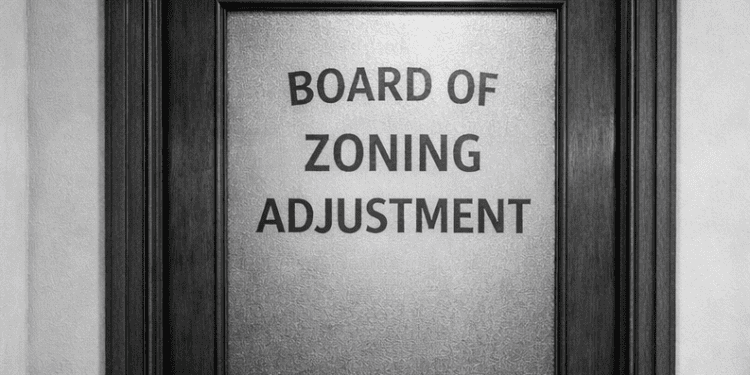
Cities are rewriting their zoning codes. More of them should.

Pittsburgh, Cobb County and others acted this fall. Buffalo, Austin and Minneapolis show what comes next.

Patrick TuoheybyPatrick Tuohey
November 6, 2026
in Community, Growth and Housing
Reading Time: 4 mins read
A A
Illinois tests the limits of local zoning control
Share on FacebookShare on TwitterLinkedInEmail
On October 27, Pittsburgh City Council voted unanimously to approve a zoning package it had debated for two years, and Mayor Corey O’Connor signed it two days later. Developers who set aside a share of their units as affordable may now build 30 to 60 feet taller, depending on location, or pay a fee, expected to start at $25 per square foot of residential space, into an affordable housing fund for the same height. The law also eliminates minimum parking requirements for new development and allows more accessory dwelling units, such as backyard cottages and basement apartments. “We have years and years telling residents, entrepreneurs, homeowners and homebuilders what they can’t do here in Pittsburgh,” O’Connor said.

Pittsburgh has company. The same day, the Cobb County, Georgia, Board of Commissioners voted 3-2 to allow ADUs in residential backyards, two years after a similar proposal was withdrawn in the face of neighborhood opposition. Park City, Utah, approved detached ADUs on larger single-family lots on Oct. 1 to comply with a new state law. In September, Bloomington, Indiana, eliminated parking minimums citywide and shrank minimum lot sizes on a 5-3 vote.

More is coming. Oak Park, Illinois, is weighing a plan to allow duplexes, triplexes and fourplexes in every residential neighborhood. Bellevue, Washington, is finishing a parking overhaul ahead of a state deadline. Dallas has begun a zoning rewrite it expects to adopt in 2027.

RelatedInsights

A Lincoln Institute report makes a stronger case against incentives than it admits

Savannah’s zoning rewrite is a blueprint for other cities

London’s housing crisis is a warning about the power to say no

Don’t Abandon the Housing Cure

None of this is untested. These cities are arriving at reforms others adopted years ago, which means there is now a record to check.

Start with parking. Buffalo became the first major American city to eliminate parking minimums citywide in 2017. University at Buffalo researchers tracked 36 major developments in the two years that followed and found that 47% included less parking than the old code would have allowed. Mixed-use projects built 53% fewer spaces than previously required. Just as telling, single-use developments often built more parking than the old minimums demanded. Builders didn’t abandon parking. They built what their tenants needed, which is exactly what a mandate prevents.

Austin offers the clearest evidence on rents. Over the past decade the city loosened zoning, eliminated parking mandates citywide in November 2023, legalized more ADUs and expanded density bonuses. The Pew Charitable Trusts found that Austin added roughly 120,000 homes from 2015 to 2024, expanding its housing stock by 30%. Median rent fell from $1,546 in December 2021 to $1,296 in January 2026, below the national median. The decline wasn’t confined to new towers; rents in older, lower-cost buildings fell about 11%. Demand matters too, and construction there has since slowed. But Pew found Austin saw the steepest rent declines of any large American city from 2021 to 2026.

Minneapolis, which ended single-family-only zoning in 2019, is a more complicated case and worth taking seriously for that reason. Economists Helena Gu and David Munro estimate that rents there ran 17 to 34% lower than they would have without the reform. But they found no construction boom, and they attribute much of the effect to softer demand. The Federal Reserve Bank of Minneapolis reports that inflation-adjusted rents have fallen nearly 20% since 2020, yet new development has stalled because rents are now too low to cover the cost of building.

That is a caution, not a reason to wait. Zoning reform removes a legal barrier. It does not repeal construction costs, interest rates or the many other regulations that add to the price of a new home. Oak Park’s own feasibility study found financing gaps of $110,000 to $220,000 for small neighborhood multifamily projects even after rezoning, and critics there have seized on the figure. But it argues for lowering costs further, not for keeping the ban. A city cannot get housing it has made illegal.

The most contested piece in Pittsburgh was the affordability incentive, which replaced an earlier proposal to require affordable units in larger developments. The least contested pieces, TribLive’s Julia Burdelski reported, were eliminating parking minimums and expanding ADUs. Those are also the reforms with the longest track record elsewhere. Whether a voluntary height bonus produces affordable units is an open question, and to its credit the council is asking it. Councilman Bob Charland has introduced a bill requiring regular public reports on how many market-rate and affordable units developers produce under the program.

Bottom line for city halls: The reforms with the strongest evidence behind them are also the cheapest. Ending parking mandates and legalizing ADUs and small multiplexes cost a city nothing but the will to let property owners build. Cities that haven’t acted should start there, attach as few conditions as possible and measure the results the way Pittsburgh now plans to. The question for council members isn’t whether these reforms are radical, it’s why their city still forbids what Buffalo, Austin and Minneapolis allowed years ago.
Tags: Affordable HousingHousing AffordabilityParkingPermitting and LicensingPlanningRegulationZoning
Previous Post

A Lincoln Institute report makes a stronger case against incentives than it admits

Patrick Tuohey

Patrick Tuohey

Patrick Tuohey is co-founder and policy director of the Better Cities Project. He works with taxpayers, media, and policymakers to foster understanding of the consequences — sometimes unintended — of policies such as economic development, taxation, education, and transportation. He also serves as a senior fellow at Missouri's Show-Me Institute and columnist for the Missouri Independent, as well as a regular contributor the The Kansas City Star and The Hill.

Explore More

  • Economic Prosperity
  • Criminal Justice and Public Safety
  • Transportation and Infrastructure
  • Education
  • Energy and Environment
  • Community, Growth and Housing
  • Clean, Open and Fair Government

Recent News

Illinois tests the limits of local zoning control

Cities are rewriting their zoning codes. More of them should.

November 6, 2026
A Lincoln Institute report makes a stronger case against incentives than it admits

A Lincoln Institute report makes a stronger case against incentives than it admits

October 14, 2026
Cities keep shelling out taxpayer money for sports stadiums, yet the economics almost never makes sense

Cities keep shelling out taxpayer money for sports stadiums, yet the economics almost never makes sense

September 30, 2026
Congestion pricing often wins over critics

New York congestion pricing wraps up first year – the numbers are in

September 15, 2026
Load More
Facebook Twitter RSS
Better Cities Project

BCP helps local leaders leverage public policy to create freer and happier communities. We uncover what works, promote solutions, and forge partnerships that turn ideas into results.


© 2025 Better Cities Project

Our Focus Areas

  • Economic Prosperity
  • Criminal Justice and Public Safety
  • Transportation and Infrastructure
  • Education
  • Energy and Environment
  • Community, Growth and Housing
  • Clean, Open and Fair Government

The Fine Print

  • Privacy Policy
  • Terms and Conditions
  • Reports and Financials

Recent News

Illinois tests the limits of local zoning control

Cities are rewriting their zoning codes. More of them should.

November 6, 2026
A Lincoln Institute report makes a stronger case against incentives than it admits

A Lincoln Institute report makes a stronger case against incentives than it admits

October 14, 2026
Cities keep shelling out taxpayer money for sports stadiums, yet the economics almost never makes sense

Cities keep shelling out taxpayer money for sports stadiums, yet the economics almost never makes sense

September 30, 2026

Welcome Back!

Login to your account below

Forgotten Password?

Retrieve your password

Please enter your username or email address to reset your password.

Log In

Add New Playlist

Love Cities? So Do We.

Get ahead of the curve -- learn about innovations, ideas and policies driving change in America's largest cities, with BCP in your inbox.


You have Successfully Subscribed!

No Result
View All Result
  • About Us
  • The Team
  • Work With Better Cities Project
  • Research and Projects
  • Latest Insights
  • Videos

© 2025 Better Cities Project