


The authors are right that inequality increases housing demand at the top of the market.
But the question should always be: compared to what? Demand has risen in many regions over the past several decades. Yet only some have experienced extreme price escalation. The difference is not inequality alone, but whether local rules allow supply to expand in response.
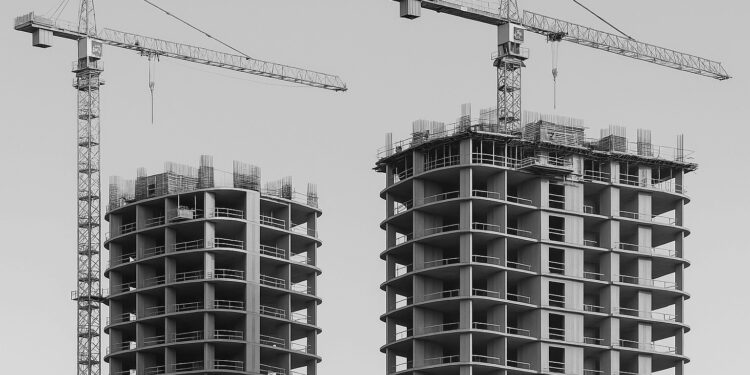
When demand rises in places where housing can be built relatively easily, builders respond and prices stabilize over time. When demand rises where new construction is tightly restricted, the adjustment occurs through higher prices instead.
Inequality increases demand, but local supply rules determine whether that demand produces more homes or simply more expensive ones.
The paper’s most attention-grabbing claim is that even a 1.5 percent annual increase in housing supply would take decades to restore affordability in high-cost cities. But that growth rate reflects one of the weakest construction periods in modern history, including the aftermath of the Great Recession and years of unusually slow building. There is little reason to assume that this constrained era defines the upper bound of what is possible under meaningful zoning reform. In earlier decades, many fast-growing regions sustained much higher rates of construction for extended periods.
Just as important, the authors define success as making the median apartment affordable to a relatively low-wage worker. That benchmark would be difficult to meet even in well-functioning housing markets, since median units are typically priced for median earners.
Policymakers rarely solve complex problems in a single stroke. Even modest rent declines can materially reduce cost burdens for families spending 40 or 50 percent of their income on housing. Partial progress is still meaningful progress.
The paper also notes that rents tend to rise alongside average incomes in a region. But this pattern does not prove regulation is irrelevant. In expensive cities, high housing costs can push lower-income households out, which in turn raises average income. High rents and high incomes can reinforce one another.
None of this means inequality is unimportant. Rising wage gaps have clearly increased housing stress for lower-income households. Targeted subsidies and income supports will continue to play a role. Yet expanding subsidies in markets where housing supply is tightly constrained risks capitalizing some of the benefit into higher rents. When the number of homes cannot expand, additional purchasing power tends to raise prices rather than increase availability.
Zoning reform, by contrast, does not require ongoing public spending. It lowers barriers to entry and allows private capital to build more homes where demand is strongest. It will not eliminate inequality. But it can prevent rising demand from hardening into long-term price spikes and entrenched scarcity.
The debate should not be framed as inequality versus supply. Both matter. But policymakers should be cautious about abandoning supply reform based on simulations built on conservative growth assumptions.
Many things shape housing affordability. A serious strategy must address the legal constraints that limit housing production.
For a deeper dive into the data and assumptions behind this debate, I recommend Michael Lewyn’s more detailed analysis.
For policymakers, the lesson is straightforward: income policy shapes who has money to compete for housing, but land-use policy determines whether that competition results in new homes or deeper exclusion. Inequality affects demand. Zoning determines whether demand turns into construction or permanent scarcity.