


Better Cities Project
  • Home
  • About Us
    Our Vision
    BCP’s vision is that free-market municipal policy solutions are broadly available, widely acceptable, and regularly employed, enabling American cities to achieve their full potential as engines of economic prosperity. We reject the idea that cities are lost to free-market principles or policies.
    Our Mission
    BCP uncovers ideas that work, promotes realistic solutions, and forges partnerships that help people in America’s largest cities live free and happy lives.
    Learn More
    • About Better Cities Project
    • Our Focus Areas
    • Our Team
    • Collaboration and Careers -- Work With BCP
  • Research and Projects
  • Latest Insights
  • Videos
  • Contact

    Address

    304 S. Jones Blvd #2826
    Las Vegas NV 89107

    Phone

    (702) 608-2046‬

    Hours

    Monday through Friday, 8 a.m. - 5 p.m.

    Email

    info@better-cities.org

No Result
View All Result
Better Cities Project
  • Home
  • About Us
    Our Vision
    BCP’s vision is that free-market municipal policy solutions are broadly available, widely acceptable, and regularly employed, enabling American cities to achieve their full potential as engines of economic prosperity. We reject the idea that cities are lost to free-market principles or policies.
    Our Mission
    BCP uncovers ideas that work, promotes realistic solutions, and forges partnerships that help people in America’s largest cities live free and happy lives.
    Learn More
    • About Better Cities Project
    • Our Focus Areas
    • Our Team
    • Collaboration and Careers -- Work With BCP
  • Research and Projects
  • Latest Insights
  • Videos
  • Contact

    Address

    304 S. Jones Blvd #2826
    Las Vegas NV 89107

    Phone

    (702) 608-2046‬

    Hours

    Monday through Friday, 8 a.m. - 5 p.m.

    Email

    info@better-cities.org

No Result
View All Result
Better Cities Project
No Result
View All Result
Home Clean, Open and Fair Government

What do cities get for record spending?

Big budgets are not the same thing as strong cities

Patrick TuoheybyPatrick Tuohey
June 18, 2026
in Clean, Open and Fair Government
Reading Time: 2 mins read
A A
Are local elected leaders as moderate as they claim?

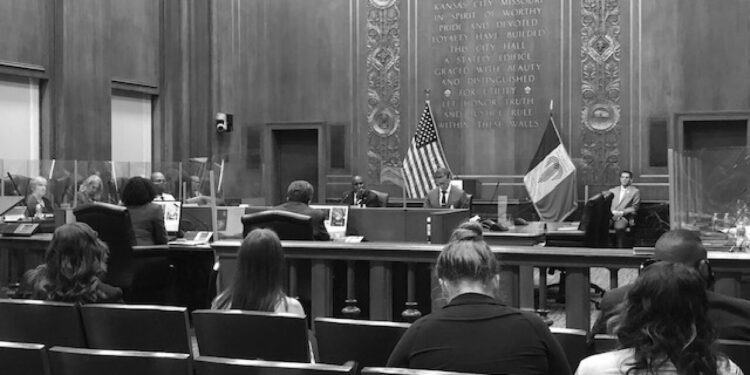
Elections for the City Council of Kansas City, Missouri are non-partisan.

Share on FacebookShare on TwitterLinkedInEmail
American cities spend more money today than at any point in modern history. Yet many of the nation’s largest municipalities struggle with declining populations, underfunded pensions, deteriorating infrastructure and persistent public-safety concerns. The question for city leaders is increasingly difficult to avoid: what exactly are taxpayers getting in return?

A recent analysis highlighted this disconnect by examining the finances of major U.S. cities. Despite legal requirements for balanced budgets, many municipalities continue accumulating long-term obligations that do not appear in annual budget debates. The result is a growing gap between what governments promise and what they can afford.

According to Truth in Accounting’s 2026 Financial State of the Cities report, the nation’s five largest cities collectively carried roughly $240 billion more in liabilities than assets available to pay those bills at the end of fiscal year 2024. Much of that burden stems from pension and retiree health obligations that accumulate over decades rather than a single budget cycle.

RelatedInsights

Local governments provide proof that polarization is not inevitable

Building digital trust amid uncertainty: a strategic opportunity for local governments

Most city councils show mid-level professionalism

Should we rethink the role of the property tax?

New York City carried the largest taxpayer burden, followed by Chicago and Philadelphia. Chicago alone faced an estimated $41 billion shortfall, equal to approximately $42,600 per taxpayer under the report’s methodology. Importantly, these figures do not necessarily mean bankruptcy is imminent. They do suggest that many cities have deferred costs into the future while continuing current spending levels.

This is not simply a fiscal problem. It is a governance problem.

Municipal budgets often reward the visible and immediate: new programs, ribbon cuttings and one-time initiatives. Long-term liabilities, by contrast, remain largely invisible until they become unavoidable. Pension underfunding rarely generates headlines during good years, but it constrains future budgets when economic conditions worsen.

The challenge becomes more acute when cities lose residents or businesses. A shrinking tax base means fewer people are available to support obligations incurred decades earlier. This dynamic creates what some observers describe as a zero-sum environment: every additional dollar devoted to legacy costs is a dollar unavailable for policing, parks, transit or infrastructure.

Cities are hardly powerless in the face of these pressures. Some municipalities have adopted stronger reserve policies, accelerated pension contributions and increased financial transparency. Others have implemented performance-based budgeting that measures whether spending produces measurable outcomes rather than simply maintaining existing programs.

The distinction matters. High spending does not automatically produce high performance. Residents care less about the size of a budget than whether streets are safe, permits are issued quickly and public services function reliably.

Critics of fiscal restraint often argue that cities are underfunded rather than poorly managed. There is some truth to this claim. Urban governments face rising costs driven by inflation, aging infrastructure and growing service demands. But additional spending without structural reform risks repeating the very patterns that produced today’s liabilities.

The more useful question is not whether cities spend enough. It is whether they spend effectively.

Municipal leaders should focus on outcomes: safer neighborhoods, faster service delivery, stronger infrastructure and long-term financial stability. Transparent accounting that fully recognizes pension and retiree obligations is an essential first step. Residents deserve to know the true cost of government, not merely its annual operating budget.

Healthy cities are built on more than ambitious spending plans. They require institutions capable of balancing present needs with future obligations. Cities that master that balance will remain attractive places to live and invest. Those that do not may discover that larger budgets alone cannot sustain urban prosperity.
Tags: BudgetsFiscal PolicyGrowthTaxes
Previous Post

Office conversions are becoming a form of industrial policy

Patrick Tuohey

Patrick Tuohey

Patrick Tuohey is co-founder and policy director of the Better Cities Project. He works with taxpayers, media, and policymakers to foster understanding of the consequences — sometimes unintended — of policies such as economic development, taxation, education, and transportation. He also serves as a senior fellow at Missouri's Show-Me Institute and columnist for the Missouri Independent, as well as a regular contributor the The Kansas City Star and The Hill.

Explore More

  • Economic Prosperity
  • Criminal Justice and Public Safety
  • Transportation and Infrastructure
  • Education
  • Energy and Environment
  • Community, Growth and Housing
  • Clean, Open and Fair Government

Recent News

Are local elected leaders as moderate as they claim?

What do cities get for record spending?

June 18, 2026
A fiscal crisis is looming for many US cities

Office conversions are becoming a form of industrial policy

May 19, 2026
When housing costs push residents out, cities should pay attention

When housing costs push residents out, cities should pay attention

April 21, 2026
Texas HB 24: A win for housing development—and a lesson for other cities

How Austin made housing cheaper

April 20, 2026
Load More
Facebook Twitter RSS
Better Cities Project

BCP helps local leaders leverage public policy to create freer and happier communities. We uncover what works, promote solutions, and forge partnerships that turn ideas into results.


© 2025 Better Cities Project

Our Focus Areas

  • Economic Prosperity
  • Criminal Justice and Public Safety
  • Transportation and Infrastructure
  • Education
  • Energy and Environment
  • Community, Growth and Housing
  • Clean, Open and Fair Government

The Fine Print

  • Privacy Policy
  • Terms and Conditions
  • Reports and Financials

Recent News

Are local elected leaders as moderate as they claim?

What do cities get for record spending?

June 18, 2026
A fiscal crisis is looming for many US cities

Office conversions are becoming a form of industrial policy

May 19, 2026
When housing costs push residents out, cities should pay attention

When housing costs push residents out, cities should pay attention

April 21, 2026

Welcome Back!

Login to your account below

Forgotten Password?

Retrieve your password

Please enter your username or email address to reset your password.

Log In

Add New Playlist

Love Cities? So Do We.

Get ahead of the curve -- learn about innovations, ideas and policies driving change in America's largest cities, with BCP in your inbox.


You have Successfully Subscribed!

No Result
View All Result
  • About Us
  • The Team
  • Work With Better Cities Project
  • Research and Projects
  • Latest Insights
  • Videos

© 2025 Better Cities Project