
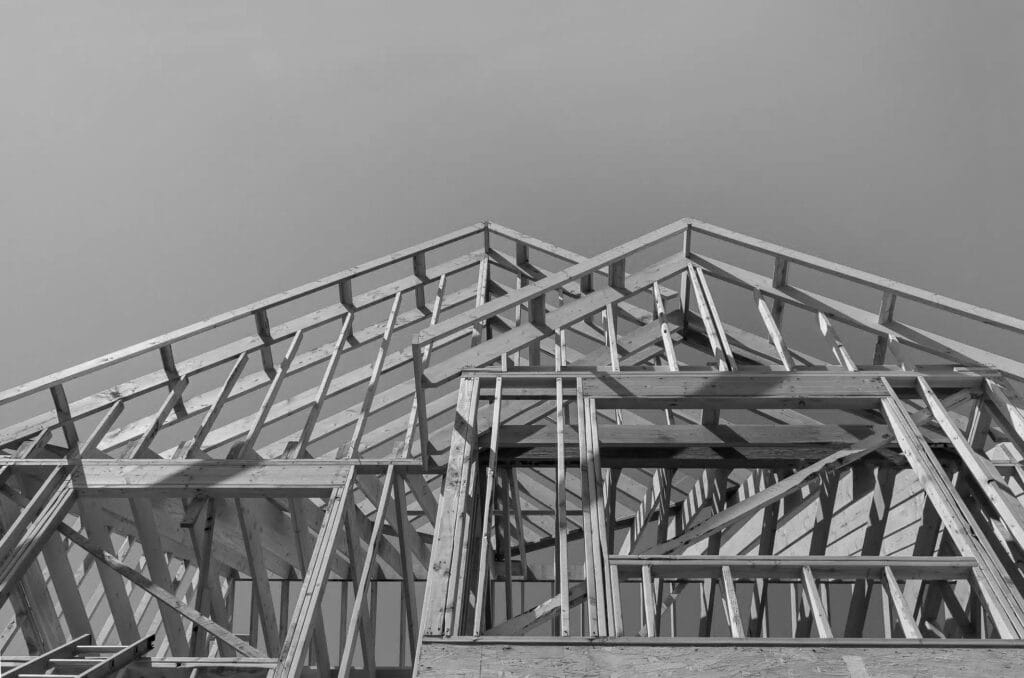
These standardized architectural designs—vetted in advance for compliance with local codes—allow builders to skip lengthy design reviews and move straight to permits. When paired with by-right zoning, this approach cuts months off timelines and saves thousands per unit.
The National Association of Home Builders (NAHB) has called pre-approved plans a “transformative tool” to boost housing production while preserving regulatory clarity. Research from the Detroit Justice Center (DJC) supports this claim, with their 2025 national survey showing that 61% of cities using pre-approved plans saved more than a month on permitting, and some reported per-unit savings of $10,000 or more.
In a housing market struggling with high interest rates, construction cost inflation, and growing demand, those savings are significant.
Proof of concept in Michigan and beyond
Kalamazoo, Michigan, has become a standout example. With hundreds of city-owned vacant lots and high redevelopment costs, officials launched a plan catalog paired with zoning reforms. By early 2024, 48 new homes had been permitted or built under the program, with approval times dropping from months to under two weeks.
More importantly, the city packaged the plans with clear guidance: how-to materials, digital submissions, and fast-track approval procedures. Rather than rely on subsidies, Kalamazoo focused on reducing friction—aligning with a broader free-market principle that the best way to support housing is to get out of the way.
Ecorse, Michigan—a much smaller city—implemented a similar program and saw comparable results. By offering a small set of slab-built, universally accessible, all-electric designs, Ecorse saved builders up to $10,000 per home while expediting permits by several weeks.
In Arizona’s Yavapai County, a rural jurisdiction with limited staff, the “Home of My Own” initiative bundled free plan downloads with simplified approval guides. It worked. Builders saved nearly $11,000 per unit, and the county avoided the need to expand its permitting apparatus to meet demand.
Survey data shows growing momentum
DJC’s 2025 national survey of planners found that 79% of jurisdictions using pre-approved plans reported process efficiency gains. One in three saw tangible cost savings. Notably, more than half of the programs included in the study used plans tailored to neighborhood character—undermining the common assumption that standardization must come at the cost of design quality.
Cities also reported better uptake when they included modular options, allowed DIY plan selection, and streamlined permit applications. Combined with modular construction, pre-approved plans can reduce development timelines by 6–8 months—crucial in markets where carrying costs often sink infill projects before they start.
Avoiding the usual traps
Several jurisdictions included in the DJC and NAHB studies encountered challenges when pre-approved plans were rolled out without supporting reforms. For example, if a city approves designs but fails to align zoning codes, the benefits are neutralized. Kalamazoo’s success hinged not just on the plans themselves, but on legalizing ADUs, relaxing lot sizes, and easing parking mandates at the same time.
Likewise, jurisdictions that published plan libraries without outreach or clear submission processes found that few builders used them. As NAHB notes, it’s not enough to create designs—cities must also “streamline the approval process” and reduce ambiguity in how builders navigate it.
Getting started: no subsidy required
Cities don’t need federal grants or multi-year task forces to move forward. The most effective programs start small: release a few shovel-ready designs, update the zoning code to match, and build in fast-track procedures. Kalamazoo partnered with local architects to develop its plan sets; Yavapai County used stock plans adapted for rural needs.
For jurisdictions facing staff shortages or political headwinds, DJC recommends starting with a pilot catalog and scaling up as adoption grows. Importantly, this is a model that works in both strong and weak markets—and unlike tax credits or public housing, it does not require ongoing funding.
If cities want more housing, they need fewer barriers. Pre-approved housing plans are a pragmatic, cost-effective way to deliver that. Builders get speed and certainty. Residents get homes. Governments get out of the way.
It doesn’t require reimagining development to achieve desired results faster.