


Better Cities Project
  • Home
  • About Us
    Our Vision
    BCP’s vision is that free-market municipal policy solutions are broadly available, widely acceptable, and regularly employed, enabling American cities to achieve their full potential as engines of economic prosperity. We reject the idea that cities are lost to free-market principles or policies.
    Our Mission
    BCP uncovers ideas that work, promotes realistic solutions, and forges partnerships that help people in America’s largest cities live free and happy lives.
    Learn More
    • About Better Cities Project
    • Our Focus Areas
    • Our Team
    • Collaboration and Careers -- Work With BCP
  • Research and Projects
  • Latest Insights
  • Videos
  • Contact

    Address

    304 S. Jones Blvd #2826
    Las Vegas NV 89107

    Phone

    (702) 608-2046‬

    Hours

    Monday through Friday, 8 a.m. - 5 p.m.

    Email

    info@better-cities.org

No Result
View All Result
Better Cities Project
  • Home
  • About Us
    Our Vision
    BCP’s vision is that free-market municipal policy solutions are broadly available, widely acceptable, and regularly employed, enabling American cities to achieve their full potential as engines of economic prosperity. We reject the idea that cities are lost to free-market principles or policies.
    Our Mission
    BCP uncovers ideas that work, promotes realistic solutions, and forges partnerships that help people in America’s largest cities live free and happy lives.
    Learn More
    • About Better Cities Project
    • Our Focus Areas
    • Our Team
    • Collaboration and Careers -- Work With BCP
  • Research and Projects
  • Latest Insights
  • Videos
  • Contact

    Address

    304 S. Jones Blvd #2826
    Las Vegas NV 89107

    Phone

    (702) 608-2046‬

    Hours

    Monday through Friday, 8 a.m. - 5 p.m.

    Email

    info@better-cities.org

No Result
View All Result
Better Cities Project
No Result
View All Result
Home Economic Prosperity

Data Centers Can Fund a City’s Future — But Only If Cities Don’t Pay for Them Twice

The lesson from Quincy and Loudoun is that the payoff comes from the tax base, not the subsidy

Patrick TuoheybyPatrick Tuohey
August 13, 2026
in Economic Prosperity
Reading Time: 3 mins read
A A
Data Centers Can Fund a City’s Future — But Only If Cities Don’t Pay for Them Twice

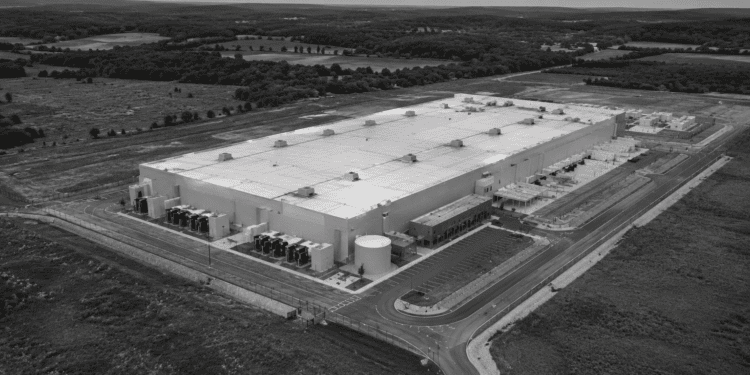
This image was created by BCP with the assistance of DALL·E, because of course.

Share on FacebookShare on TwitterLinkedInEmail
Quincy, Washington, is a farming town of 8,500 people a few hours east of Seattle, known for potatoes, apples and alfalfa. It is also home to roughly 30 data centers, which now generate an estimated 57% of the city’s property taxes. That revenue has paid for a new $120 million high school, a hospital, a public library, police and fire stations, paved sidewalks and a $15 million aquatic center, according to CNN. Two decades after Microsoft bought 75 acres of bean fields there to build a server farm, Quincy’s poverty rate has fallen from 29.4% in 2012 to 6.2% in 2024.

Across the country, Loudoun County, Virginia, tells a similar story with different numbers. Data centers now generate almost half of the county’s property tax revenue, and the county has cut its real property tax rate every year for a decade—from $1.145 per $100 of assessed value in 2016 to $0.805 in 2026. A 2026 report by Mangum Economics for the Northern Virginia Technology Council found that without data center revenue, the typical Loudoun homeowner’s property tax bill would need to rise by roughly $5,800 a year just to maintain current service levels.

These are useful data points at a moment when data centers have become a favorite municipal villain. Cities and counties around the country are enacting construction bans and moratoriums, citing power costs, water use and neighborhood disruption. Some of those concerns are legitimate. But Quincy and Loudoun suggest that, handled correctly, a data center boom can be one of the more durable fiscal assets a local government can land. It’s dense commercial tax value that funds services without loading costs onto homeowners—and without the traffic, school growth or public-safety strain that housing or retail development typically brings.

RelatedInsights

Texas won the data center boom. Now comes the bill

Tax subsidies should have a test they can fail

The World Cup may have boosted spending. That isn’t the same as economic growth.

Opportunity Zones and the limits of place-based development policy

The word doing the work in that sentence is “correctly.” Neither Quincy nor Loudoun bought its data centers with public money. Microsoft came to Quincy for cheap hydropower, not tax abatements. Loudoun’s advantage is proximity to fiber infrastructure and a deep regional market, not a bidding war. In both places, the county collected taxes on commercial property that would otherwise not exist, and residents got the benefit without the county borrowing against a projection.

That is not how every city is playing it. Kansas City offers the counterexample. PortKC, the city’s port authority, authorized $10 billion in bonds to help lure Meta and Google data centers to the region. Incentives for the Meta project alone could reach $8.2 billion over 37 years—more than triple the city’s entire annual budget. The promised windfall hasn’t shown up. Smithville School District, which serves the area around Meta’s Project Velvet campus, has reported tax payments in the low thousands, not the millions once projected. A national study by the nonprofit Good Jobs First found this pattern is common: data center subsidy deals frequently produce a poor return on investment, because the facilities are capital-intensive but generate few permanent jobs, often at a cost approaching $2 million per position.

The contrast is instructive for policymakers weighing their own data center proposals. A facility that pays ordinary commercial property taxes, on infrastructure a company builds with its own capital, is a genuine fiscal asset—one that broadens the tax base and can lower the burden on everyone else. A facility built on public bonds, discounted utility rates and abated taxes is a different animal entirely, and the fiscal case for it depends entirely on assumptions about future revenue that, as Smithville has learned, do not always hold up.

Local officials facing a data center proposal do not need to choose between welcoming the industry and protecting taxpayers. They need to ask which version of the deal they are actually getting. Does the developer need public financing to make the project work, or is it paying its own way in exchange for land use approval and grid access? Are the tax projections independently verified, or supplied by the developer’s own consultants? Is there a clawback provision if promised revenue does not materialize? Quincy and Loudoun did not need a special deal to benefit from data centers—they needed the industry to show up and pay ordinary taxes on extraordinarily valuable property. Cities chasing the next data center campus should ask why they’d need to offer any more than that.

Tags: Data CentersEconomic DevelopmentSubsidiesTaxesTechnology
Previous Post

Texas won the data center boom. Now comes the bill

Patrick Tuohey

Patrick Tuohey

Patrick Tuohey is co-founder and policy director of the Better Cities Project. He works with taxpayers, media, and policymakers to foster understanding of the consequences — sometimes unintended — of policies such as economic development, taxation, education, and transportation. He also serves as a senior fellow at Missouri's Show-Me Institute and columnist for the Missouri Independent, as well as a regular contributor the The Kansas City Star and The Hill.

Explore More

  • Economic Prosperity
  • Criminal Justice and Public Safety
  • Transportation and Infrastructure
  • Education
  • Energy and Environment
  • Community, Growth and Housing
  • Clean, Open and Fair Government

Recent News

Data Centers Can Fund a City’s Future — But Only If Cities Don’t Pay for Them Twice

Data Centers Can Fund a City’s Future — But Only If Cities Don’t Pay for Them Twice

August 13, 2026
Powering progress or draining resources?

Texas won the data center boom. Now comes the bill

August 4, 2026
London’s housing crisis is a warning about the power to say no

London’s housing crisis is a warning about the power to say no

August 3, 2026
Tax subsidies should have a test they can fail

Tax subsidies should have a test they can fail

July 24, 2026
Load More
Facebook Twitter RSS
Better Cities Project

BCP helps local leaders leverage public policy to create freer and happier communities. We uncover what works, promote solutions, and forge partnerships that turn ideas into results.


© 2025 Better Cities Project

Our Focus Areas

  • Economic Prosperity
  • Criminal Justice and Public Safety
  • Transportation and Infrastructure
  • Education
  • Energy and Environment
  • Community, Growth and Housing
  • Clean, Open and Fair Government

The Fine Print

  • Privacy Policy
  • Terms and Conditions
  • Reports and Financials

Recent News

Data Centers Can Fund a City’s Future — But Only If Cities Don’t Pay for Them Twice

Data Centers Can Fund a City’s Future — But Only If Cities Don’t Pay for Them Twice

August 13, 2026
Powering progress or draining resources?

Texas won the data center boom. Now comes the bill

August 4, 2026
London’s housing crisis is a warning about the power to say no

London’s housing crisis is a warning about the power to say no

August 3, 2026

Welcome Back!

Login to your account below

Forgotten Password?

Retrieve your password

Please enter your username or email address to reset your password.

Log In

Add New Playlist

Love Cities? So Do We.

Get ahead of the curve -- learn about innovations, ideas and policies driving change in America's largest cities, with BCP in your inbox.


You have Successfully Subscribed!

No Result
View All Result
  • About Us
  • The Team
  • Work With Better Cities Project
  • Research and Projects
  • Latest Insights
  • Videos

© 2025 Better Cities Project