


Better Cities Project
  • Home
  • About Us
    Our Vision
    BCP’s vision is that free-market municipal policy solutions are broadly available, widely acceptable, and regularly employed, enabling American cities to achieve their full potential as engines of economic prosperity. We reject the idea that cities are lost to free-market principles or policies.
    Our Mission
    BCP uncovers ideas that work, promotes realistic solutions, and forges partnerships that help people in America’s largest cities live free and happy lives.
    Learn More
    • About Better Cities Project
    • Our Focus Areas
    • Our Team
    • Collaboration and Careers -- Work With BCP
  • Research and Projects
  • Latest Insights
  • Videos
  • Contact

    Address

    304 S. Jones Blvd #2826
    Las Vegas NV 89107

    Phone

    (702) 608-2046‬

    Hours

    Monday through Friday, 8 a.m. - 5 p.m.

    Email

    info@better-cities.org

No Result
View All Result
Better Cities Project
  • Home
  • About Us
    Our Vision
    BCP’s vision is that free-market municipal policy solutions are broadly available, widely acceptable, and regularly employed, enabling American cities to achieve their full potential as engines of economic prosperity. We reject the idea that cities are lost to free-market principles or policies.
    Our Mission
    BCP uncovers ideas that work, promotes realistic solutions, and forges partnerships that help people in America’s largest cities live free and happy lives.
    Learn More
    • About Better Cities Project
    • Our Focus Areas
    • Our Team
    • Collaboration and Careers -- Work With BCP
  • Research and Projects
  • Latest Insights
  • Videos
  • Contact

    Address

    304 S. Jones Blvd #2826
    Las Vegas NV 89107

    Phone

    (702) 608-2046‬

    Hours

    Monday through Friday, 8 a.m. - 5 p.m.

    Email

    info@better-cities.org

No Result
View All Result
Better Cities Project
No Result
View All Result
Home Economic Prosperity

Nashville boomed. But for whom should cities grow?

When cities chase growth, tourism and investment, they risk forgetting the people who already call them home.

Patrick TuoheybyPatrick Tuohey
September 8, 2026
in Economic Prosperity
Reading Time: 4 mins read
A A
Nashville boomed. But for whom should cities grow?
Share on FacebookShare on TwitterLinkedInEmail
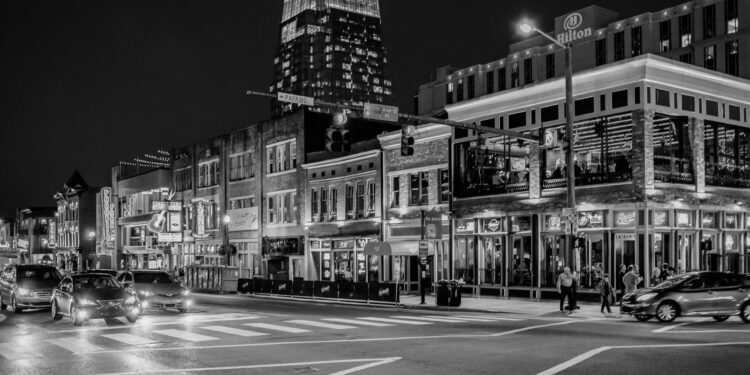
I was in Nashville with my daughter in early August to see a concert. Even on a weekday afternoon, the downtown seemed bustling, over and above the crowds we encountered on Broadway.

Nashville feels successful. But that success raises a question every growing city eventually has to answer.

And like every other American city, I am sure there are plenty of advocates for taxpayer subsidized investments who want to claim that success as their own. The two of us were exactly the kind of economic impact these subsidies are designed to produce: We visited from well outside the metro region to attend an event at Bridgestone Arena. We spent money on the event, and on local hotels, meals and souvenirs.

RelatedInsights

Data Centers Can Fund a City’s Future — But Only If Cities Don’t Pay for Them Twice

Texas won the data center boom. Now comes the bill

Tax subsidies should have a test they can fail

The World Cup may have boosted spending. That isn’t the same as economic growth.

Nashville’s success is not an illusion. Public investment and aggressive promotion helped turn the city’s musical identity into an exceptionally lucrative tourism economy. But success after an intervention is not proof of success because of it. Nashville already possessed a music industry, a major healthcare cluster, Vanderbilt University, state-capital status and the demographic tailwinds lifting much of the South.

Subsidies may have shifted investment from one part of downtown to another, but shifting growth around a city is not the same as creating it. Those economic impact studies cited by city boosters rarely establish how much of that growth would otherwise have occurred—or whether the benefits exceeded the public costs and the disruption imposed on residents.

No one can deny the boom. The city had such a reputation for growth that several MLB franchises—including my own hometown’s Kansas City Royals— let speculation swirl that they might relocate to Nashville, using the threat to squeeze local governments for even more taxpayer largesse.

Who gets credit for the boom is one question. Who bears the burden is another.

Plenty of cities might still envy Nashville’s growth, but that growth has come at a real cost to the people who already lived there.

One of the places we set out to visit was Noshville, a New York City-style deli that has been catering to Nashvillians for 30 years. Its last location will close in 2027, the result in part of increasing costs, including a jump in both the citywide property tax rate and appraisals. It showcases that while Nashville has become a place more people want to visit, work and live, Music City has become a more expensive place to remain. A 2024 Vanderbilt University survey of longtime locals found that over half (55%) believed the city’s recent growth made their lives worse.

Freddie O’Connell channeled this feeling in his campaign for mayor the year before. In highlighting his opposition to economic development subsidies for the Titans, one of his ads pitted residents against the billionaires and bachelorettes who, “are getting all the wins.” After his victory, O’Connell promised an administration that would make the city, “more ‘ville and less Vegas.”

Mind you, O’Connell was never purist on incentives. As a councilmember he voted to subsidize the city’s soccer stadium. Since becoming mayor, he’s signaled that the city may offer Starbucks incentives over and above what the state offered them for expanding their Nashville offices.

A more recent Vanderbilt survey found a majority of residents now believe the city is on the wrong track and that O’Connell’s approval rating has fallen, with 82% saying they could not afford to buy a home in Davidson County and just 36% planning to.

Residents are not anti-development. In fact, sometimes voters demand their elected leaders be “job creators” rather than just grass cutters and pothole fillers. But there is a tension between supporting growth and focusing on meeting the imagined needs of visitors, investors and possible future residents.

Certainly, Nashville should not remain what it was in 1995. Cities change because people change them. New residents arrive, businesses open and close, neighborhoods evolve and land becomes more or less valuable.

City leadership should not erect unnecessary barriers to change. Yet they shouldn’t imagine themselves building a city different from what residents have made it, or doing so faster than residents are ready for. There is a difference between allowing changes to emerge from millions of individual decisions and having city leaders decide what kind of economy—and, inevitably, what kind of city—they want to create.

Cities often have master plans to manage development. Perhaps instead cities should make allowances to develop without a master.

Local government can create the conditions for growth without trying to determine its destination. It can provide public safety and infrastructure, protect property rights, make it easier to build housing and operate a regulatory system that allows residents and businesses to respond to changing circumstances. City officials have plenty to do without trying to predict which industries, attractions or residents their communities should pursue.

That approach requires some humility. No mayor or economic-development agency knows which neighborhoods future residents will value or which local institutions will eventually become part of a city’s character. Governments can respond to those changes; they are less equipped to anticipate them.

The Nashville I visited was energetic, crowded and prosperous—the kind of place people move to, invest in and vacation in. It just isn’t the kind of place a 30-year-old deli can still afford to call home. The question city leaders should ask before setting out to transform their communities: Is their job to create the city they imagine, or to make it possible for the people who live there to create the city they want, themselves?
Tags: Economic DevelopmentGrowthHistory of CitiesPlanningPoliticsResearchSubsidies
Previous Post

When Government Reports Become the Problem

Patrick Tuohey

Patrick Tuohey

Patrick Tuohey is co-founder and policy director of the Better Cities Project. He works with taxpayers, media, and policymakers to foster understanding of the consequences — sometimes unintended — of policies such as economic development, taxation, education, and transportation. He also serves as a senior fellow at Missouri's Show-Me Institute and columnist for the Missouri Independent, as well as a regular contributor the The Kansas City Star and The Hill.

Explore More

  • Economic Prosperity
  • Criminal Justice and Public Safety
  • Transportation and Infrastructure
  • Education
  • Energy and Environment
  • Community, Growth and Housing
  • Clean, Open and Fair Government

Recent News

Nashville boomed. But for whom should cities grow?

Nashville boomed. But for whom should cities grow?

September 8, 2026
When Government Reports Become the Problem

When Government Reports Become the Problem

August 31, 2026
Initial thoughts on Kansas City’s deal with the Royals

Initial thoughts on Kansas City’s deal with the Royals

August 19, 2026
Savannah’s zoning rewrite is a blueprint for other cities

Savannah’s zoning rewrite is a blueprint for other cities

August 18, 2026
Load More
Facebook Twitter RSS
Better Cities Project

BCP helps local leaders leverage public policy to create freer and happier communities. We uncover what works, promote solutions, and forge partnerships that turn ideas into results.


© 2025 Better Cities Project

Our Focus Areas

  • Economic Prosperity
  • Criminal Justice and Public Safety
  • Transportation and Infrastructure
  • Education
  • Energy and Environment
  • Community, Growth and Housing
  • Clean, Open and Fair Government

The Fine Print

  • Privacy Policy
  • Terms and Conditions
  • Reports and Financials

Recent News

Nashville boomed. But for whom should cities grow?

Nashville boomed. But for whom should cities grow?

September 8, 2026
When Government Reports Become the Problem

When Government Reports Become the Problem

August 31, 2026
Initial thoughts on Kansas City’s deal with the Royals

Initial thoughts on Kansas City’s deal with the Royals

August 19, 2026

Welcome Back!

Login to your account below

Forgotten Password?

Retrieve your password

Please enter your username or email address to reset your password.

Log In

Add New Playlist

Love Cities? So Do We.

Get ahead of the curve -- learn about innovations, ideas and policies driving change in America's largest cities, with BCP in your inbox.


You have Successfully Subscribed!

No Result
View All Result
  • About Us
  • The Team
  • Work With Better Cities Project
  • Research and Projects
  • Latest Insights
  • Videos

© 2025 Better Cities Project