


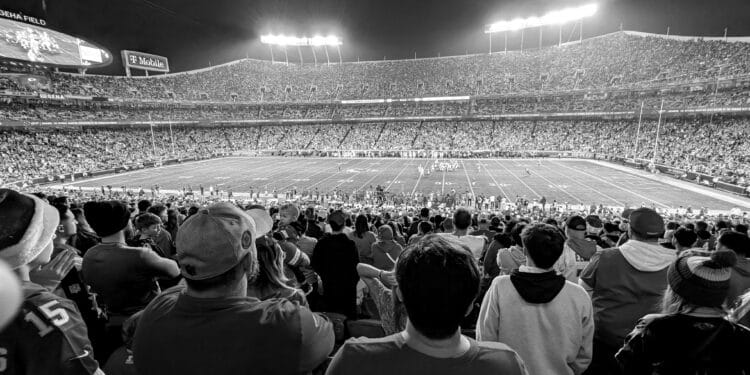
A lot of money is at stake. For 2025, the NFL reported some US$14.5 billion in revenue, while the MLB collected an estimated $12.2 billion and the NBA earned almost $12 billion.
Given these numbers, it’s no surprise that leagues and franchises have sought to build bigger, fancier facilities. But such projects come with hefty price tags. The stadium planned to house the Washington Commanders, for example, is expected to cost $4 billion, while SoFi Stadium in Los Angeles cost $6.75 billion, making it the most expensive NFL stadium in history when it was completed in 2020.
At the same time, it’s rare that the leagues or franchises that rake in their teams’ winnings cover the entire construction cost of new facilities. In fact, most new sports stadiums receive funding from state or local governments – meaning taxpayers often foot much of the bill. Between 1970 and 2020, taxpayers across the United States and Canada paid some $33 billion toward the construction of sports arenas, roughly 73% of the total cost.
The standard approach by leagues and franchises is to offer state and local officials both carrots and sticks. Policymakers and the public are promised jobs, sustained economic growth, improved infrastructure, increased tax revenues and rising property values. Should public funds fail to materialize, franchises often threaten to move – presumably taking the touted economic benefits with them.
As economists, we have to play both sides of the field when it comes to analyzing public policy. As sports fans and taxpayers, however, we have a vested interest in understanding the economics of using public funds for private sports stadiums. And we believe the promised benefits are vastly overblown.
About 75% of Americans watch live sports, whether in person or on TV or devices, with some fans spending 10 or more hours a week. Without a doubt, sports are in important part of American culture and history.
This passion for sports, however, can cloud a fan’s understanding of the basic data. We’ll address the most common claims one by one.
Show me the money
Proponents of these public financing deals promise broader economic benefits. But history shows that the public almost never recoups the initial subsidy.
In an analysis of the economic impacts of sports stadiums over four decades, through the early 2020s, researchers found little to no economic benefits for taxpayers or communities, including per capita income. Other research has concluded that effects on job growth have similarly been negligible.
Study after study tells the same story: The promised boom never seems to materialize. Stadiums have had no systematic impact on new business openings. And when it comes to property values, evidence is mixed at best. Some scholars have found no effects at all, while others have concluded that property values around stadiums increased – but only after teams left.
Time after time, any benefits resulting from these projects were consistently overshadowed by the massive costs to the public.
Where tax dollars go
Another often-made argument by leagues and franchises is that new stadiums will yield a larger tax base and increased tax revenue. But the record shows that new venues have failed to leave policymakers bigger budgets to work with.
One study of Truist Park in Atlanta, which examined the fiscal effects of the 2017 relocation of the Atlanta Braves, is a typical example. While the county housing the baseball stadium did see a small increase in tax revenue the year after it opened, there was a similar bump in surrounding counties as well.
The stadium, in other words, had no effect.
Importantly, the increase in tax revenues didn’t offset the subsidies from public budgets for building and running the stadium. In fact, taxpayers lost about $15 million annually because the increase in tax revenue didn’t cover the costs of servicing the extra public debt and other remaining expenses.
Consider the downside
New sports stadiums, proponents argue, don’t inflict other kinds of costs on their surrounding communities.
We argue that these venues certainly do generate traffic on game day – but not the kind of traffic driving economic growth.
Researchers have found the potential for negative spillover on nearby communities, from congestion that makes it difficult for residents and business owners to access their properties to higher pollution and increases in crime.
A question of trade-offs
These findings may seem puzzling. When you watch sports in person or on television, you see full stadiums, with people buying food and wearing new team merchandise.
So why don’t these projects deliver the promised economic benefits? The answer lies in two simple principles: Resources – like disposable income – are scarce, and trade-offs matter.
The people spending money at new stadiums usually aren’t out-of-town visitors bringing cash into the local economy. They tend to be residents, which means they’re simply reallocating their leisure dollars from one activity to another.
A family spending $500 at the stadium isn’t creating $500 in new economic activity. It’s choosing to see a football game in person over dining at a restaurant, visiting a museum or going on some other outing. Because consumers tend to be on a budget, the stadium may change where they spend their money, but not how much they shell out. This produces a shift rather than a net increase in economic activity in their community.
The same principle applies to the tax dollars slated for stadium construction. It’s public money that can’t be used on roads, schools, emergency services or tax refunds. Even if some economic activity is created, that new stadium doesn’t generate greater benefits than if the money were spent elsewhere.
Another reason why these projects fail to deliver is that proponents consistently overhype the benefits. The “economic impact analyses” used to sell these projects to the public and policymakers are notoriously flawed. Often undertaken by sports franchises themselves, the assumptions underlying these analyses are, to put it politely, heroic.
Consider the study for a proposed soccer stadium in Raleigh, North Carolina. Its analysis projected roughly 11% new stadium-related growth for a full decade and assumed attendance would increase from under 280,000 to more than 560,000 over 10 years.
Then there’s the forecast for a proposed deal with MLB’s Kansas City Royals, which assumed the local tax base would grow consistently for 40 straight years and that sale tax revenues would increase by 2.5% every year through 2071.
These are just a few examples, but this type of rosy forecasting is widespread.
The never-ending story
Understanding the economic realities of publicly funded sports stadiums is important for state and local government and taxpayers across the country.
The NFL’s Buffalo Bills just opened a new stadium at a cost of $2.1 billion, with $850 million of that coming from taxpayers. The Tennessee Titans are building a $2.1 billion football stadium, with $1.2 billion in public funding, while the NBA Portland Trailblazers are spending hundreds of millions on renovations so the team won’t leave the city.
Citing similar concerns, officials in Tampa, Florida, have pledged public contributions of $967 million to the Rays for their new $2.3 billion baseball stadium. The Chicago Bears are threatening the state of Illinois that they may take their football team across the border because Indiana is offering $1 billion in public funding for a new stadium in Hammond.
This is just the start. With the lifespan of professional stadiums lasting around 30 years, a wave of construction is expected in coming years to replace or renovate venues built in the 1990s. Despite the fact that most existing stadiums are architecturally sound, cities and states are facing pressure to shell out billions of dollars in public funding to support shiny new ones.
Given the pinch caused by broader affordability concerns and strapped public dollars, the question is whether lawmakers will continue to follow the lead of leagues and franchises or start addressing the true cost to their communities.
Washington D.C. Councilman Charles Allen put it succinctly during the 2025 debate over the Commanders’ deal, noting that the D.C. budget was facing millions of dollars in cuts. “And yet I’m going to find over a billion dollars to build a stadium that’s going to get used 25 to 30 times a year?” he asked. “We really have to ask ourselves about the trade-offs.”
This article is republished from The Conversation under a Creative Commons license. Read the original article.