

A version of the following commentary appeared in the St. Louis Post-Dispatch on December 18, 2025.
Think of restaurant owners who cling to their dream in the face of falling sales and mounting debts. By not cutting their losses early, they make matters worse.
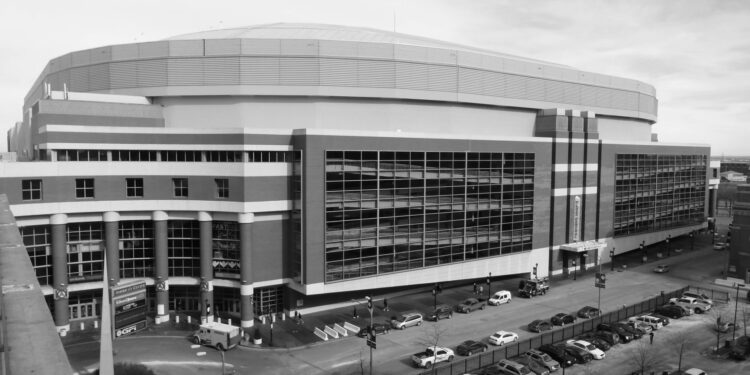
The problem St. Louis faces with the Dome and Convention Center is largely the same.
Both facilities are financial sinkholes. Neither produces operating revenue, and both run persistent losses sustained only by public subsidies. The Convention and Tourism Fund shows year after year of large tax-funded transfers — $11.4 million in 2022, $16.2 million in 2023, and more than $20 million in 2024.
The Dome, for its part, faces a long-term capital deficit of roughly $68 million and is propped up by public payments and dwindling investment returns from the Rams settlement. Neither facility reflects a self-sustaining operation in city or county financial statements.
Yet, despite this, the head of Explore St. Louis, the city’s convention and tourism bureau, Brad Dean, recently told the St. Louis Post-Dispatch that the Dome is an important regional asset.
That’s not just misleading — it’s flatly false. The Dome is functionally a liability; it’s a money pit.
We can choose to continue shoveling money into these two enterprises, hoping that if we just spend a little more they might somehow become profitable. Dean is a chief proponent of this magical thinking. He argues that St. Louis must not fall behind other cities in convention infrastructure investment.
What does that even mean? The city is already losing money. Are we to believe we need to spend even more just to — what? Lose more competitively?
Apparently, yes. The recent $240 million AC Next Gen expansion of the Convention Center is being financed with public money — primarily bonds backed by hotel and restaurant taxes — supplemented by additional city contributions as costs increase. None of it has been funded by operating revenue from the convention center itself. In other words, taxpayers didn’t just maintain a money-losing facility; we expanded it.
Let’s stop pretending failure is progress.
Some might argue that while the Convention Center requires subsidies, this is true of all convention centers and that they are necessary amenities for cities to have. Why? Municipal governments have no more expertise running convention centers than they do operating bait and tackle shops. If investors are not interested in risking their own money, why should taxpayers be asked to do so?
Tax dollars should instead be going to basic services such as police and infrastructure. Convention centers fall far outside the scope of government. It is a want, not a need. And St. Louis has a lot of needs.
This is the type of thinking we often get about spending public funds — because unlike a restaurateur betting their mortgage on the business, taxpayer money is at the same time everyone’s and no one’s. No one is going to lose their house if the Dome fails for another year. Quite the opposite: Explore St. Louis staff, construction companies and a handful of vendors benefit from the ongoing fiscal bloodletting.
St. Louis is in a difficult situation. The city is shedding population and losing large employers, making it more difficult to generate the funds needed to provide basic city services. Crime statistics are promising of late but still too high. And yet if the Dome and Convention Center were to mysteriously disappear overnight, the city would not be negatively impacted and in fact would be financially better off.
Referring to an obvious public liability as a “regional asset” demonstrates either an inability or an unwillingness to see reality. It is unserious. St. Louis faces plenty of difficult policy choices, but the decision about whether to throw more money at these two failures is an easy one. Shut them down.