

Better Cities Project
  • Home
  • About Us
    Our Vision
    BCP’s vision is that free-market municipal policy solutions are broadly available, widely acceptable, and regularly employed, enabling American cities to achieve their full potential as engines of economic prosperity. We reject the idea that cities are lost to free-market principles or policies.
    Our Mission
    BCP uncovers ideas that work, promotes realistic solutions, and forges partnerships that help people in America’s largest cities live free and happy lives.
    Learn More
    • About Better Cities Project
    • Our Focus Areas
    • Our Team
    • Collaboration and Careers -- Work With BCP
  • Research and Projects
  • Latest Insights
  • Videos
  • Contact

    Address

    304 S. Jones Blvd #2826
    Las Vegas NV 89107

    Phone

    (702) 608-2046‬

    Hours

    Monday through Friday, 8 a.m. - 5 p.m.

    Email

    info@better-cities.org

No Result
View All Result
Better Cities Project
  • Home
  • About Us
    Our Vision
    BCP’s vision is that free-market municipal policy solutions are broadly available, widely acceptable, and regularly employed, enabling American cities to achieve their full potential as engines of economic prosperity. We reject the idea that cities are lost to free-market principles or policies.
    Our Mission
    BCP uncovers ideas that work, promotes realistic solutions, and forges partnerships that help people in America’s largest cities live free and happy lives.
    Learn More
    • About Better Cities Project
    • Our Focus Areas
    • Our Team
    • Collaboration and Careers -- Work With BCP
  • Research and Projects
  • Latest Insights
  • Videos
  • Contact

    Address

    304 S. Jones Blvd #2826
    Las Vegas NV 89107

    Phone

    (702) 608-2046‬

    Hours

    Monday through Friday, 8 a.m. - 5 p.m.

    Email

    info@better-cities.org

No Result
View All Result
Better Cities Project
No Result
View All Result
Home Media & Commentary

Dome, Convention Center are the opposite of ‘regional assets’

Patrick TuoheybyPatrick Tuohey
January 13, 2026
in Media & Commentary
Reading Time: 3 mins read
A A
Dome, Convention Center are the opposite of ‘regional assets’
Share on FacebookShare on TwitterLinkedInEmail

A version of the following commentary appeared in the St. Louis Post-Dispatch on December 18, 2025.

Few decisions are harder for a business owner than knowing when to walk away. It’s not just a matter of balance sheets and bottom lines. When you build something and pour your life into it, it can be difficult to see it dispassionately.

Think of restaurant owners who cling to their dream in the face of falling sales and mounting debts. By not cutting their losses early, they make matters worse.

RelatedInsights

Cities should stick to the basics of governing

You’ll never guess which city is king of recruiting remote workers

When ‘not in my backyard’ slows housing development

KC suburbs report card: Are these cities’ finances built for tomorrow?

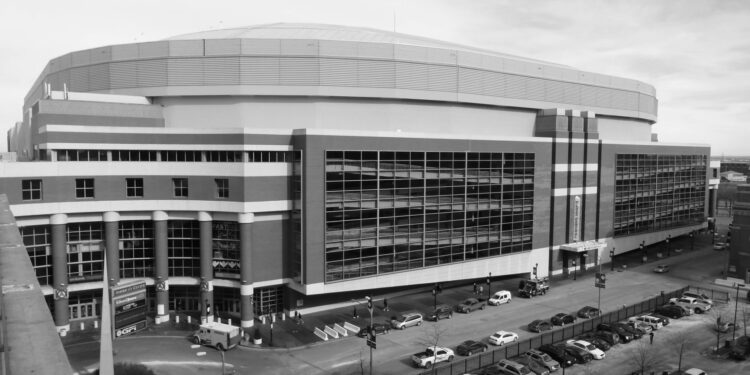
The problem St. Louis faces with the Dome and Convention Center is largely the same.

Both facilities are financial sinkholes. Neither produces operating revenue, and both run persistent losses sustained only by public subsidies. The Convention and Tourism Fund shows year after year of large tax-funded transfers — $11.4 million in 2022, $16.2 million in 2023, and more than $20 million in 2024.

The Dome, for its part, faces a long-term capital deficit of roughly $68 million and is propped up by public payments and dwindling investment returns from the Rams settlement. Neither facility reflects a self-sustaining operation in city or county financial statements.

Yet, despite this, the head of Explore St. Louis, the city’s convention and tourism bureau, Brad Dean, recently told the St. Louis Post-Dispatch that the Dome is an important regional asset.

That’s not just misleading — it’s flatly false. The Dome is functionally a liability; it’s a money pit.

We can choose to continue shoveling money into these two enterprises, hoping that if we just spend a little more they might somehow become profitable. Dean is a chief proponent of this magical thinking. He argues that St. Louis must not fall behind other cities in convention infrastructure investment.

What does that even mean? The city is already losing money. Are we to believe we need to spend even more just to — what? Lose more competitively?

Apparently, yes. The recent $240 million AC Next Gen expansion of the Convention Center is being financed with public money — primarily bonds backed by hotel and restaurant taxes — supplemented by additional city contributions as costs increase. None of it has been funded by operating revenue from the convention center itself. In other words, taxpayers didn’t just maintain a money-losing facility; we expanded it.

Let’s stop pretending failure is progress.

Some might argue that while the Convention Center requires subsidies, this is true of all convention centers and that they are necessary amenities for cities to have. Why? Municipal governments have no more expertise running convention centers than they do operating bait and tackle shops. If investors are not interested in risking their own money, why should taxpayers be asked to do so?

Tax dollars should instead be going to basic services such as police and infrastructure. Convention centers fall far outside the scope of government. It is a want, not a need. And St. Louis has a lot of needs.

This is the type of thinking we often get about spending public funds — because unlike a restaurateur betting their mortgage on the business, taxpayer money is at the same time everyone’s and no one’s. No one is going to lose their house if the Dome fails for another year. Quite the opposite: Explore St. Louis staff, construction companies and a handful of vendors benefit from the ongoing fiscal bloodletting.

St. Louis is in a difficult situation. The city is shedding population and losing large employers, making it more difficult to generate the funds needed to provide basic city services. Crime statistics are promising of late but still too high. And yet if the Dome and Convention Center were to mysteriously disappear overnight, the city would not be negatively impacted and in fact would be financially better off.

Referring to an obvious public liability as a “regional asset” demonstrates either an inability or an unwillingness to see reality. It is unserious. St. Louis faces plenty of difficult policy choices, but the decision about whether to throw more money at these two failures is an easy one. Shut them down.
Source: St. Louis Post-Dispatch
Tags: ConventionEconomic DevelopmentFiscal PolicySubsidiesTourism
Previous Post

The vanishing starter home

Patrick Tuohey

Patrick Tuohey

Patrick Tuohey is co-founder and policy director of the Better Cities Project. He works with taxpayers, media, and policymakers to foster understanding of the consequences — sometimes unintended — of policies such as economic development, taxation, education, and transportation. He also serves as a senior fellow at Missouri's Show-Me Institute and a visiting fellow at the Virginia-based Yorktown Foundation for Public Policy.

Explore More

  • Economic Prosperity
  • Criminal Justice and Public Safety
  • Transportation and Infrastructure
  • Education
  • Energy and Environment
  • Community, Growth and Housing
  • Clean, Open and Fair Government

Recent News

Dome, Convention Center are the opposite of ‘regional assets’

Dome, Convention Center are the opposite of ‘regional assets’

January 13, 2026
The vanishing starter home

The vanishing starter home

January 6, 2026
The math doesn’t work: Kansas’ STAR bonds alone can’t fund a Chiefs stadium

The math doesn’t work: Kansas’ STAR bonds alone can’t fund a Chiefs stadium

December 30, 2025
What the Twin Cities teach us about how cities should—and shouldn’t—fix housing

What the Twin Cities teach us about how cities should—and shouldn’t—fix housing

December 19, 2025
Load More
Facebook Twitter RSS
Better Cities Project

BCP helps local leaders leverage public policy to create freer and happier communities. We uncover what works, promote solutions, and forge partnerships that turn ideas into results.


© 2025 Better Cities Project

Our Focus Areas

  • Economic Prosperity
  • Criminal Justice and Public Safety
  • Transportation and Infrastructure
  • Education
  • Energy and Environment
  • Community, Growth and Housing
  • Clean, Open and Fair Government

The Fine Print

  • Privacy Policy
  • Terms and Conditions
  • Reports and Financials

Recent News

Dome, Convention Center are the opposite of ‘regional assets’

Dome, Convention Center are the opposite of ‘regional assets’

January 13, 2026
The vanishing starter home

The vanishing starter home

January 6, 2026
The math doesn’t work: Kansas’ STAR bonds alone can’t fund a Chiefs stadium

The math doesn’t work: Kansas’ STAR bonds alone can’t fund a Chiefs stadium

December 30, 2025

Welcome Back!

Login to your account below

Forgotten Password?

Retrieve your password

Please enter your username or email address to reset your password.

Log In

Add New Playlist

Love Cities? So Do We.

Get ahead of the curve -- learn about innovations, ideas and policies driving change in America's largest cities, with BCP in your inbox.


You have Successfully Subscribed!

No Result
View All Result
  • About Us
  • The Team
  • Work With Better Cities Project
  • Research and Projects
  • Latest Insights
  • Videos

© 2025 Better Cities Project